

![[NL] - Riviervissen op karper: zo pakt Jelmer Simmes het aan - KarperCentrale](http://www.carpcentral.com/cdn/shop/articles/nl-riviervissen-op-karper-zo-pakt-jelmer-simmes-het-aan-1106953.png?v=1785226050&width=10)
Carp fishing on a large river
River carp fishing requires a different approach than fishing a closed lake. The carp can cover large distances, water levels and currents can change, and a spot that held fish confidently yesterday can be completely deserted today.
In this video, Jelmer Simmes takes you along during a multi-day carp session on a large French river. He starts without concrete info about the spots and has to figure out where the carp travel, where the bait is taken, and where he can safely present his rigs.
The video doesn’t just show the successful moments. You also see how much preparation, moving around, and checking is needed before everything comes together. That’s what makes the session educational for carp anglers wanting to fish a river themselves.
Safety always comes first
When river fishing, a rubber boat is often used to scout spots, place rigs precisely, or transport gear to remote places. A life jacket is indispensable for this.
Jelmer and cameraman Kevin notice during the trip that their life jackets weren’t brought along. Instead of continuing without them, they make an extra stop to get new jackets.
That’s an important lesson. A river can be unpredictable. Even when the surface looks calm, currents, shipping traffic, depth changes, and floating debris can pose dangers.
Always check your boat, valves, paddles, life jacket, and any lighting before you leave. Don’t go on the water if your gear isn’t in order or conditions are too dangerous.
Bait multiple spots
Jelmer chooses not to put everything in one spot. He baits multiple spots and later checks where the bait was actually taken.
This approach increases the chance of finding an active route. On a river, a large number of carp can pass through a certain stretch, while a spot a few hundred meters away remains almost untouched.
By lightly baiting several promising zones, you gather information. A spot that’s completely cleared gets more attention. If almost all the bait remains, you can move that rod to another place.
This way you avoid spending a whole night at a spot where the carp aren’t coming at that moment.
Look for flat plateaus along sloping banks
Many riverbanks slope steeply. When you bait with boilies or tiger nuts there, they can roll further down than the spot where you placed them.
Jelmer looks for flat plateaus. On a horizontal strip, the bait stays put better and you can more easily check later if it has been taken.
A plateau about two meters deep can be interesting when it connects to deeper water or a route along the bank. The carp can come up from the channel, feed briefly on the plateau, and then move on.
Don’t just check the depth. Also look at the hardness of the bottom, shells, mussels, pits, obstacles, and transitions between different bottom types.
Use an underwater camera to check spots
An important tool during this session is the underwater camera. Jelmer uses it to check if his bait has gone and to inspect the bottom around the chosen rig position.
In some spots he still sees various boilies lying around. On other strips, almost nothing remains. That’s a strong indication that real activity has taken place there.
An empty bait spot doesn’t automatically prove only carp have fed there. Still, it’s valuable info, especially when you also see signs of disturbed bottom, cloudy water, or natural food sources present.
The camera is also used to find obstacles. This way Jelmer can place his rigs precisely without putting them too close to dangerous branches or other hazards.
Watch for natural migration routes
On the river, Jelmer finds strips with lots of mussels and shells. Such spots can be interesting because they offer structure and natural food.
A bare sandy bottom can be crossed by carp but gives less reason to linger. A strip with mussels, harder patches, and depth changes can form a natural route or feeding zone.
The combination of a channel, structure along the bank, and a flat plateau is often more interesting than just a random hard patch.
Try to understand how the carp move through the river profile. Look where deep and shallow water meet, where the current breaks, and where the fish can cruise without much effort.
Check a spot before fishing it overnight
Jelmer doesn’t want to waste a whole night on old bait that’s still untouched on the bottom. That’s why he checks the key spots before casting out the rods.
If there is still a lot of bait, it may mean the carp haven’t been there. In that case, he chooses another zone or lets the spot rest for another day.
If the bait is gone, the spot is carefully checked again. Only then does he mark safe rig positions and cast out the rods.
This method takes time but builds much more confidence. You get a better idea of what lies on the bottom and avoid placing a rig based on feeling alone.
Do not automatically re-bait a large amount
When a feeding spot is largely empty, Jelmer adds some bait again. If only a small part is taken, he tops up sparingly and gives the spot more time.
That’s an important nuance. More bait is not automatically better. On a river, you want to bring enough bait to make passing carp stop, but not so much that it takes days before the spot is cleared.
The amount should fit the expected fish activity, water temperature, session duration, and presence of bycatch.
By checking regularly, you can adjust the amount. This way, you build a spot based on observations instead of a fixed amount of bait applied the same everywhere.
Combining boilies and tiger nuts
For his summer river fishing, Jelmer uses a combination of two types of boilies and tiger nuts. The boilies have different diameters, including 20 and 25 millimeters.
Larger boilies can help keep the bait on the spot longer and limit the impact of small bycatch. Tiger nuts provide a different food stimulus and remain recognizable on the bottom for a long time.
By combining both, a varied feeding spot is created. Jelmer can then fish with a single boilie, a larger boilie, or two tiger nuts as hook bait.
This way, he discovers during the session which presentation is taken best.
Spread feeding on a river
Jelmer feeds relatively spread out on the river. Carp moving along a river stretch need to be able to find the bait and then be encouraged to keep searching.
When feeding spread out, he adjusts his leader length. He usually uses leaders of about 20 to 25 centimeters. During this session, he opts for about 24 centimeters.
A longer leader gives the carp more room to move when picking up loose boilies or tiger nuts among the spread bait.
On a very compact feeding spot, Jelmer suggests fishing shorter, for example with a leader of about 16 to 18 centimeters.
Jelmer Simmes’ Hook Clip Rig
On a large river, you often encounter bycatch. This means you need to check more often if the hook is still sharp. Jelmer doesn’t want to tie a completely new leader after every catch, so he uses a Hook Clip Rig.
With this system, the hook can be quickly replaced while the rest of the leader can be reused. This saves time and makes it easier to always fish with a sharp hook.
For the rig, Jelmer uses a soft coated leader material of 20 or 30 lb, depending on the conditions. He first strips about 21 centimeters and then leaves about 23 centimeters of coating intact.
The exact dimensions can be adjusted to the desired length of the hair and the final leader.
Making a hair for boilies and tiger nuts
At the stripped end, Jelmer first makes a loop for the hair. He deliberately makes it a bit larger when fishing with two tiger nuts.
The bottom tiger nut can then rest against the knot. This prevents the bait from sliding undesirably over the hair.
A rig ring is placed under the hair. Jelmer first secures it with a simple knot so he can still slide the ring.
If you fish with one boilie, the distance can be shorter. If you want to fish with two large boilies, slide the ring further back. When the right distance is reached, the ring is fixed definitively with a second knot.
Mounting the hook clip and hook
After making the hair, Jelmer slides the hook clip onto the material. It’s secured with four or five wraps of a knotless knot.
According to him, more wraps aren’t necessary. Too large a knot section makes it harder to slide the kicker neatly over the hook clip.
Next, a large kicker is placed on the leader. The hook point goes through the rig ring and the hook eye is hung in the hook clip. Then you slide the kicker over the entire connection.
This way the hook is firmly held but can be quickly removed from the clip when replaced.
Choose a strong hook for river fishing
Jelmer uses large, strong Wide Gape hooks in size 2 for his river fishing. He adjusts the exact model to the heaviness of the conditions.
A river carp can fight hard and swim straight for obstacles. That’s why he chooses a hefty hook that matches the heavy mainline, leader, and rods.
If you use a smaller or lighter hook, adjust the size of the kicker accordingly. The components must fit well together so the connection stays strong and the hook can turn freely.
Check the hook point after every catch or contact with the bottom. Thanks to the hook clip, a damaged hook can be replaced immediately.
Finishing the leader neatly
At the other end of the leader, Jelmer slides on a tungsten anti-tangle sleeve. Then he ties a strong double loop with a figure-eight knot.
At the transition from the coated to the stripped material, he places a piece of putty. This helps keep the leader neatly against the bottom.
He keeps the supple section near the hook at least four to five centimeters long. This allows the hook enough freedom to turn when a carp takes the bait.
The coated section provides enough reset power. If the rig is moved without hooking the carp, the leader can stretch again.
Testing different types of hook baits at the same time
Jelmer sets three rods at different depths and uses three different hookbait presentations. One rod gets a 25-millimeter boilie, one a 20-millimeter boilie, and the third two tiger nuts.
By fishing multiple options simultaneously, he gathers information faster. Sometimes a larger bait works better, while on other days carp take a subtler presentation more quickly.
It’s wise not to change too many variables at once. For example, keep rig type, leader material, and baiting strategy largely the same. This way you can better judge if the hookbait really makes a difference.
Single hookbait or feeding a few boilies
At a spot where bait was previously taken, Jelmer also tries fishing with a single hookbait. A single striking presentation can be surprisingly quickly found on a large river.
Still, he later adds a few boilies for confidence. This creates a small amount of extra attraction without immediately making a large baited area again.
This can be a good approach when you suspect the carp is still nearby but aren’t sure if it’s actively feeding.
A handful of boilies around the rig gives a passing carp a reason to pause briefly, while your spot can quickly be cleared out.
Using markers to find the right stretch again
Jelmer uses markers to relocate his baited river stretches. On a wide river, it can be difficult from the bank to find exactly the same spot every time.
With a marker, he can return precisely to the chosen zone during baiting and when heading out. This is especially useful when the riverbed changes sharply over a few meters.
Place a marker safely and ensure it poses no danger to the carp, shipping, or other water users. Remove it when you leave the spot.
Safely placing rigs around obstacles
At one of the stripped spots, Jelmer discovers many obstacles. So he decides not to rely solely on his depth sounder.
Using the underwater camera, he checks exactly where the branches and other hazards lie. Then he marks the spots where a rig can be safely placed.
Getting a bite isn’t enough. You also need a realistic chance to safely land the carp. If the rig lies too close to an obstacle, the fish can get snagged before you have control.
Only fish in an obstacle-rich spot when your gear, rod position, and fight strategy are adapted to it.
Heavy gear for river fishing
For his river fishing, Jelmer uses powerful 12 ft carp rods with a 4 lb test curve. He deliberately opts for rods with plenty of backbone.
With such a rod, he can better control a carp and apply more pressure when the fish swims toward an obstacle. He can also cast heavy lead weights with it.
Jelmer uses lead up to about 300 grams on certain river spots. A light, soft rod isn’t designed to safely handle such weights.
Match your entire setup. A heavy rod only makes sense if your line, leader, knots, hook, and rig are also suited to the conditions.
Why heavy lead may be necessary
Current and shipping traffic can cause a light rig to move. Heavy lead helps keep the rig in the chosen spot.
The required weight varies per river. On a sheltered bank spot, less weight may suffice. In a deeper channel or stronger current, much heavier lead may be needed.
After casting out, check if the rig actually stays put. If the lead shifts, the rig can end up outside the safe or baited zone.
Never automatically use the heaviest lead. Choose the lightest weight that keeps the rig reliably in place.
Stay mobile and dare to move
Jelmer’s session involves a lot of moving. Gear is reloaded, boats need to be inflated, and various spots are checked.
This is physically and logistically demanding but often necessary on a river. If the bait remains untouched or the spot looks lifeless, moving can yield more than stubbornly staying put.
A spot that seemed good earlier may later go completely quiet. Jelmer then chooses to return to a spot he trusts more and where activity was previously observed.
Mobile fishing doesn’t mean driving around without a plan. Every move is based on information about taken bait, bottom structure, weather conditions, and previous bites.
Accept bycatch as part of river fishing
On large rivers, bycatch is almost impossible to completely avoid. Even big boilies or tiger nuts can be taken by other fish.
Jelmer uses the Hook Clip Rig partly to quickly check and replace his hook after every bycatch. This keeps him efficient and avoids having to tie a complete leader each time.
Bycatch doesn’t automatically mean no more carp will come to the spot. Different fish can visit the same feeding zone shortly after each other.
Stay calm, check your rig, and place it back carefully. Don’t immediately conclude that the spot is lost.
Weather changes and water temperature
During the session, rain and changing conditions are forecasted, but the weather develops differently than expected. The water temperature also drops.
That can affect carp activity. A sudden cooling can cause a spot to be visited less frequently for a while.
Still, Jelmer keeps trusting the fed zones. A river is unpredictable and can suddenly produce a bite after hours without activity.
Use weather forecasts as part of your plan, but also base decisions on what you actually see at the water.
Why perseverance on the river pays off
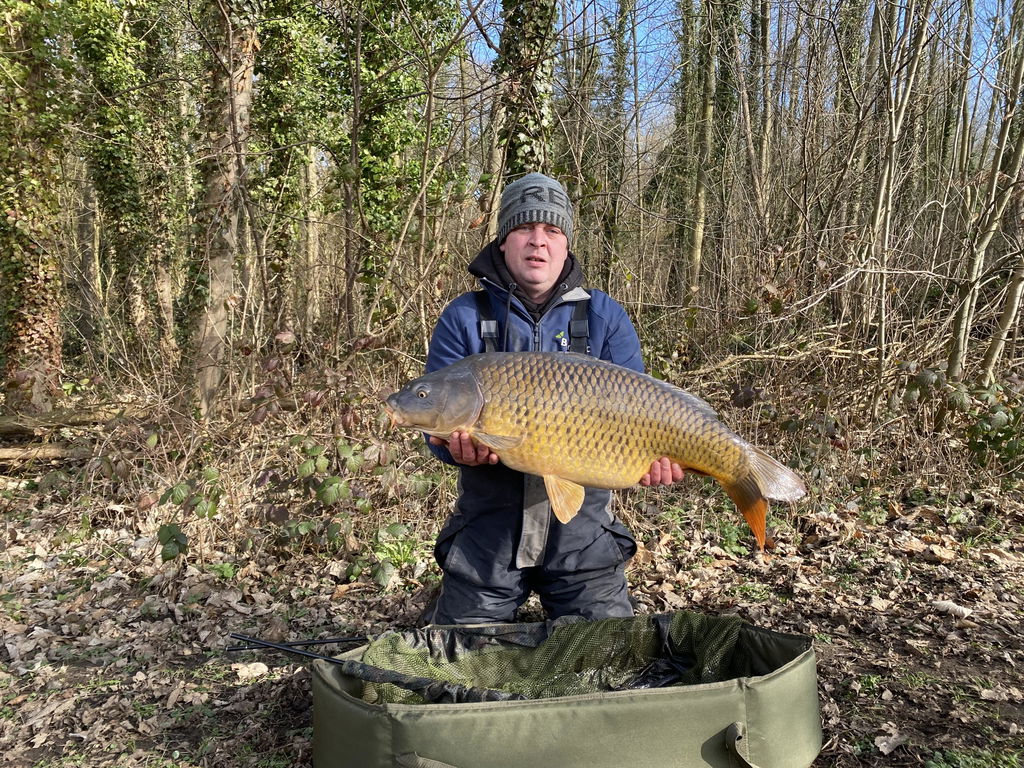
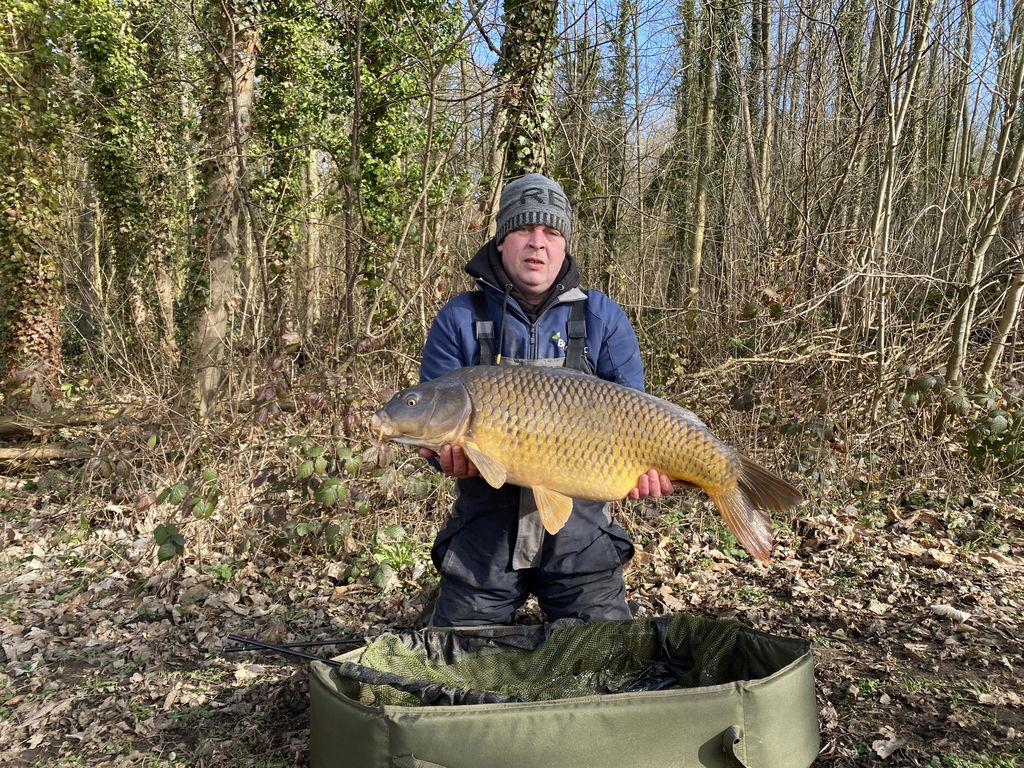
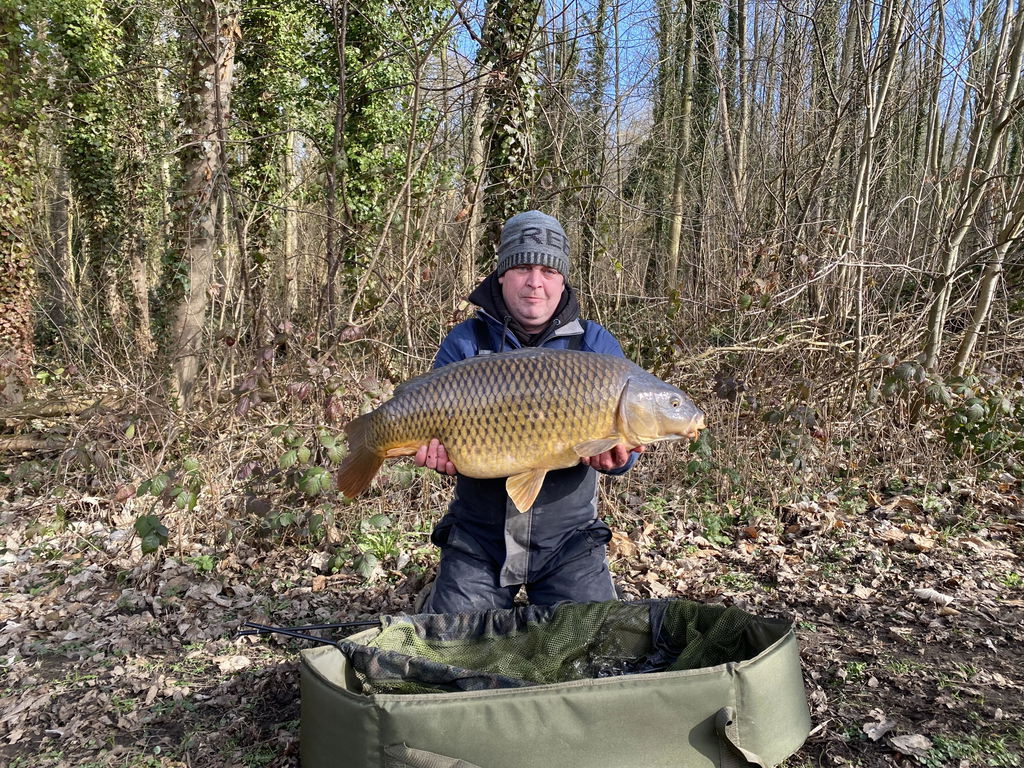
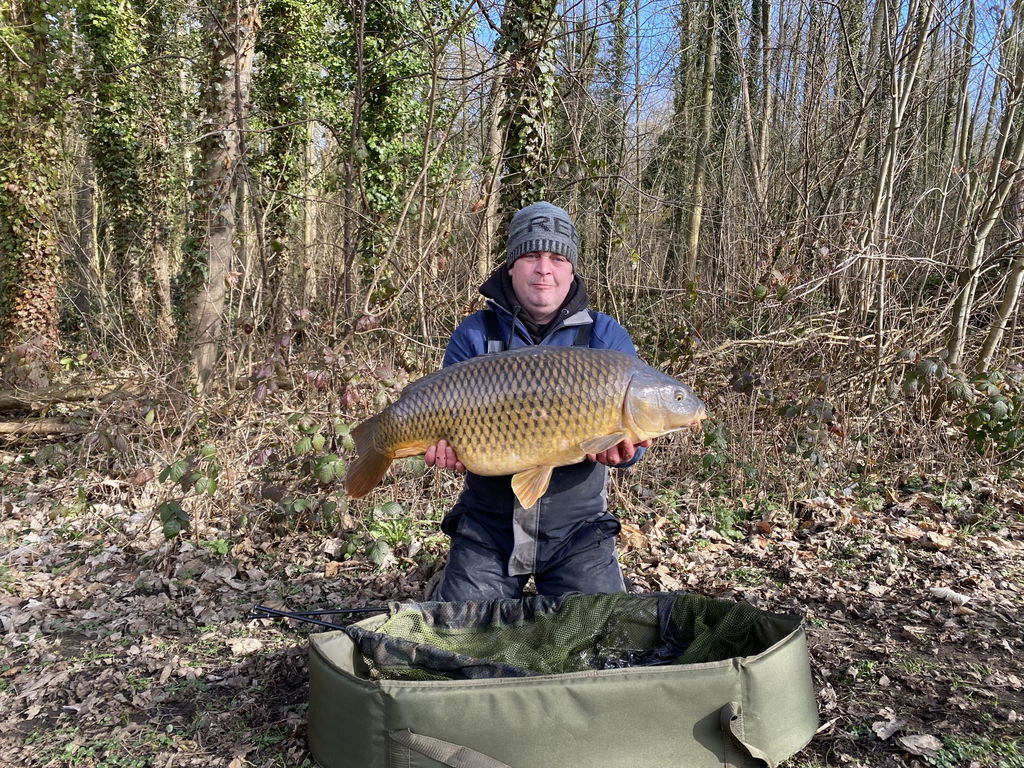
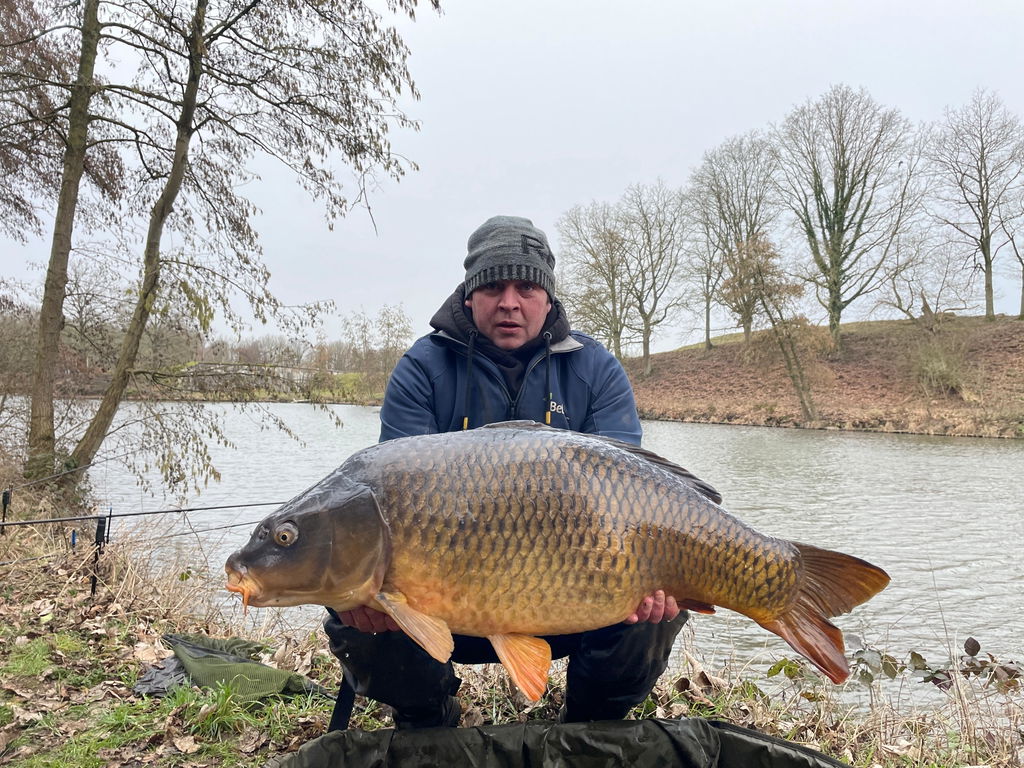
After several days of feeding, checking, boating, and moving, the hoped-for bite finally comes. The carp turns out to be an exceptionally heavy and characterful river fish.
The catch isn’t the result of one lucky cast. The spot was fed for several days, the bottom was checked, and the rig was safely placed around the obstacles present.
Later, more carp follow, making it clear that the chosen river stretch is indeed visited by different fish.
That shows why river fishing demands so much perseverance. You might see little for days, but when the puzzle fits, one bite can reward all the effort.
What do you learn in this How-to video?
In this video, you learn how Jelmer selects multiple river spots, feeds them, and checks them with an underwater camera. You’ll see why flat plateaus, mussel beds, channels, and structure-rich bank zones are interesting.
He also explains step-by-step how to tie his Hook Clip Rig. You’ll learn how to attach the hair, rig ring, hook clip, hook, kicker, and anti-tangle sleeve, and how to adjust the leader length for spread or compact feeding.
Material choice, heavy lead weights, fishing around obstacles, boat safety, and the importance of staying mobile are also covered extensively.
The main lesson is that successful river fishing isn’t just about waiting long. It’s an active fishery where observing, checking, and adjusting are constantly needed.
Start with a clear river plan
If you want to fish for carp on a river yourself, start with a clear plan. Select a few zones with different depths and bottom structures. Feed them sparingly and check where activity occurs.
Then choose spots where you can safely present your rigs and where you can responsibly play a hooked carp. Make sure your gear suits the current and any obstacles present.
Prepare enough rigs and sharp spare hooks. Bring safety gear and check your bait boat before you leave.
Stay critical during the session. A spot that was good before doesn’t have to be productive every day. By gathering information and moving at the right moment, you ultimately increase your chances of that special river carp.
About the author