

![[ENG] - Urban karpervissen in Cardiff met Tom Maker - KarperCentrale](http://www.carpcentral.com/cdn/shop/articles/eng-urban-karpervissen-in-cardiff-met-tom-maker-8799544.png?v=1785226055&width=10)
Carp fishing right in the heart of the city
When you think of carp fishing, you might first picture quiet lakes, green banks, and remote spots. The Wharf in Cardiff shows a completely different side of carp fishing. This former commercial port area lies right in the city, surrounded by apartments, bridges, roads, and footpaths.
Still, there are special and big carp here. In this video, Tom Maker takes you along during a session on this remarkable urban water. He shows that urban carp fishing isn’t just about dealing with crowds. Finding and tracking the carp is just as important.
The fish can move quickly across the long and wide water. One day Tom sees dozens of carp under a bridge, while the same spot seems almost deserted the next day. Staying still is rarely the best tactic here.
The Wharf: a unique carp water
The Wharf used to be a busy commercial port. Nowadays, the water is known for a stock of strikingly beautiful carp, including several large and heavily scaled specimens.
The surroundings are anything but traditional. Residents look out over the water from their apartments, and passersby walk right behind the rods. Under bridges, carp sometimes swim just a few meters from the daily city life.
The fish seem accustomed to noise and human activity. Traffic, pedestrians, and movement on the bridge don’t automatically cause panic. However, that doesn’t mean the carp are easy to catch. They can quickly change location and have plenty of space to move on in many spots.
First observe, then set up your gear
Tom starts the session with a walk along the water. He checks under bridges, along walls, and in different parts of the water. Sometimes he gets help from unexpected sources.
Residents of the surrounding apartments have a good view of the carp from above. They sometimes point out carp groups to anglers that are barely visible from the bank.
Under a bridge, Tom finally spots a large number of fish. He even sees some heavily scaled carp that would weigh over 40 lb. At that moment, the choice is clear: gear is gathered and he tries to fish as close as possible to the fish present.
This highlights an important rule in urban carp fishing: don’t automatically pick the easiest or most comfortable swim. First locate the carp, then build your approach around their position.
Finding a clean spot on an irregular bottom
According to Tom, the bottom of The Wharf is very variable. There are stones, hard patches, and clear depth changes. That’s why he first casts without baiting directly.
He looks for a relatively shallow zone with a smooth and clean drop-off. Such a gentle drop-off gives him confidence that the rig won’t get caught between large stones or other material.
After a few casts, he finds a suitable spot. Choosing a clean area is important because he wants to present his rigs precisely. Especially with a limited amount of bait, you want the hookbait to remain easily accessible.
In an urban environment, the bottom is often harder to predict. Old walls, building materials, and other hard structures can continue underwater. So take the time to carefully check every new spot.
An extra opportunity along the quay wall
From his spot, Tom can also reach part of the quay wall. Carp regularly swim along this wall, especially when conditions are favorable.
He first baits only a small amount here. About half a box of chopped boilies is combined with crushed nuts and hemp. Then the spot is left alone for a while.
Because the spot is close by, Tom can regularly check if the carp have found the bait. Almost immediately, a fish appears at the baited spot.
This is a strong tactic for urban carp fishing. Small bank spots can quickly produce results, but only when you bait carefully and don’t disturb the zone directly with a rig.
Spinner rigs with two different hookbait types
For the rods aimed towards the bridge, Tom uses his trusted spinner rig. He fishes two different hookbait presentations to discover which the carp respond to best.
The first presentation consists of a yellow pop-up. On the second rod, he uses a balanced nut hookbait with a piece of yellow foam.
Both presentations stand out against the dark bait. The yellow color provides a clear visual target, while the nut hookbait matches the groundbait mix well.
Later in the session, Tom notices that the balanced nut hookbait with yellow foam produces the most action. That’s why he eventually switches both rods to this presentation.
That’s a practical lesson: test different options, but respond to the information the carp give you. Don’t keep fishing with hookbait out of habit when an alternative clearly performs better.
Hemp, tiger nuts, and a clouded bait trail
The groundbait mix mainly consists of whole and crushed tiger nuts and hemp. By crushing the nuts partially, different sizes of bait particles are created.
The smaller particles create dispersed attraction and keep the carp busy longer. Whole tiger nuts offer something bigger to pick up. The combination makes the carp search and regularly return to the baited zone.
Tom first puts five Spombs of bait on the clean spot. After a catch, he adds four more Spombs. He then consistently repeats this amount.
The first fish show that the approach works. They stay in the zone and regularly show themselves over the bait.
Five takes during a spectacular start.
The first take doesn’t take long. After about an hour, the rod pulls away with the balanced nut hookbait and yellow foam.
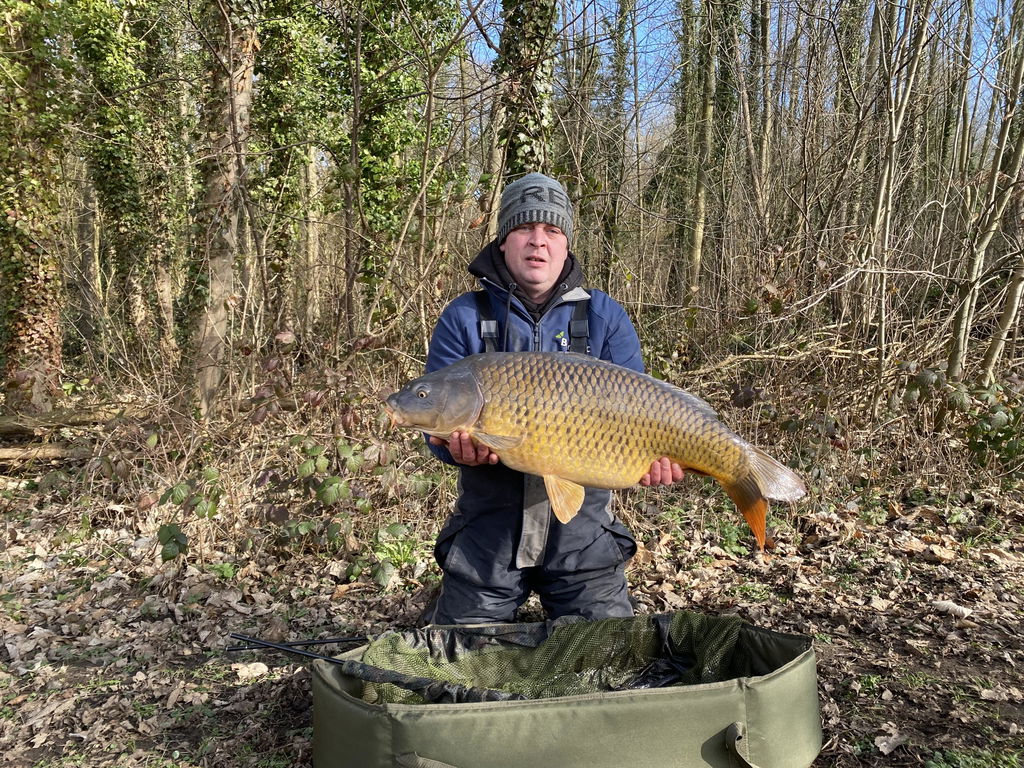
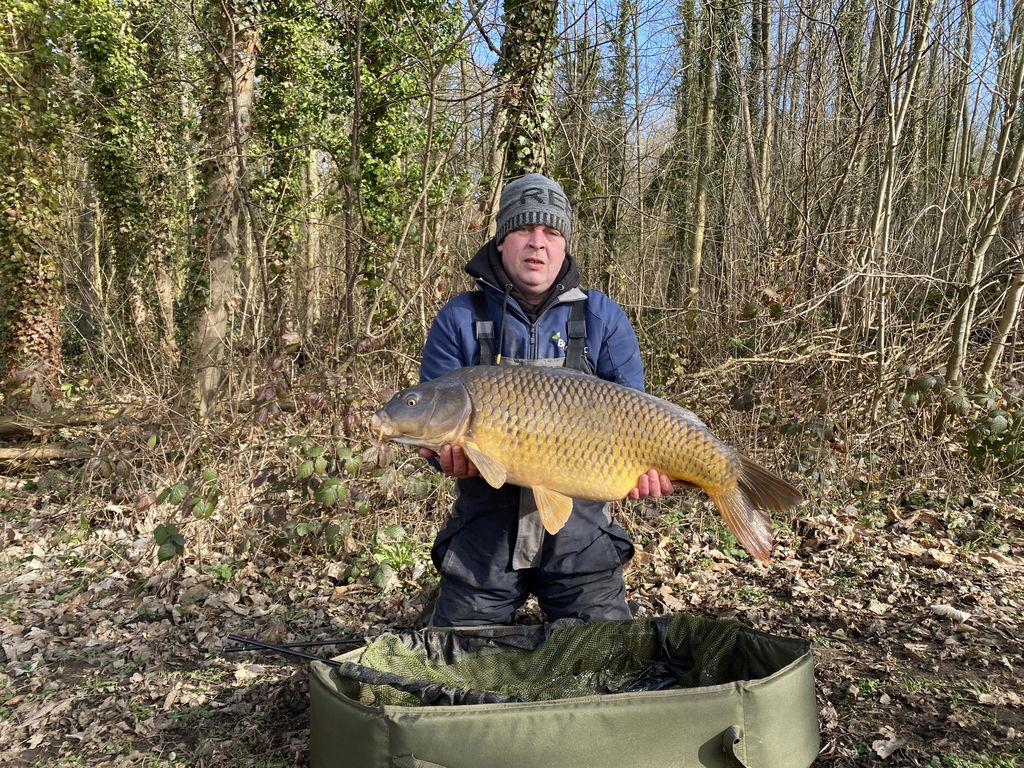
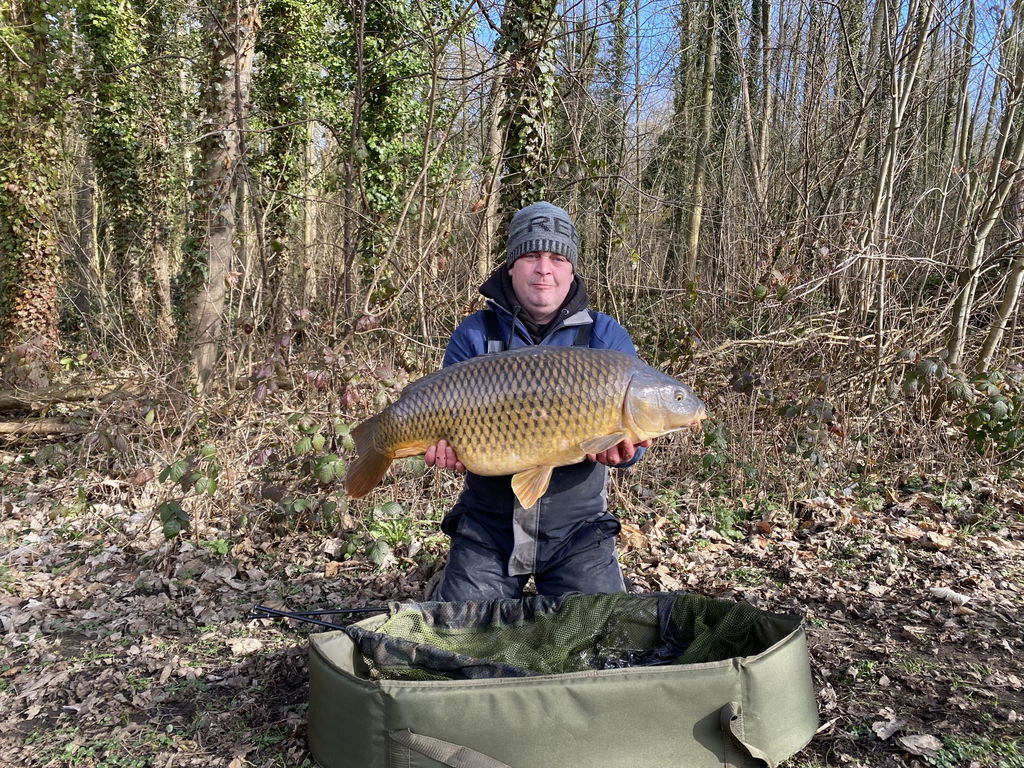
The caught carp turns out to be a particularly well-scaled fish. Shortly after, another take follows. Within a short period, Tom lands several characterful carp.
At one point, even the other rod goes off while he’s still playing a fish. By staying calm and keeping the lines tidy, he manages to land that carp as well.
In about half an hour, three carp are caught and a fourth fight follows. The first phase of the session results in five takes.
One of the fish weighs 33 lb and, according to Tom, is one of the most beautiful carp he has ever caught. It’s exactly the type of fish he joined The Wharf for.
Keep baiting as long as the carp are present.
After every catch, Tom quickly recasts the rods. Then he adds a limited amount of the same bait mix again.
He doesn’t constantly change distance, rig, or bait. The carp are clearly present and responding well. In such a situation, consistency is more important than always trying something new.
By consistently adding roughly the same amount each time, he keeps the fish active without overloading the spot suddenly.
This is especially important when several carp come to the bait in quick succession. Too little baiting can cause the group to move on. Too much bait can upset the balance between loose feed and hookbait.
In urban carp fishing, everything changes fast.
After the spectacular first day, activity almost completely stops during the night. The surroundings become quiet and the carp seem to have disappeared.
The next morning, Tom sees only a few fish. The dozens of carp from the day before are gone. The Wharf stretches over 1,000 yards long and about 120 yards wide. The fish can quickly spread out over a large area.
Tom decides to move on. He doesn’t rely solely on the success of the previous day but reassesses the situation.
That’s one of the key lessons from the video. A spot where you caught several carp yesterday isn’t automatically the right choice today. The current behaviour of the fish remains decisive.
Staying mobile with light gear
After a short coffee break, Tom continues walking along the water. He visits a spot where he caught a carp a month earlier and sees some fish there again.
Instead of setting up the full camp right away, he casts a few rods with PVA mesh bags into the zone where the carp are showing.
This approach keeps him mobile. He can react quickly without losing much time setting up and breaking down all his gear.
Especially on a long urban water, that’s an advantage. The carp can move on at any moment. A compact setup and ready-to-go rigs help you keep up with them.
Fishing shows with PVA mesh bags
When Tom sees carp jumping, he casts three rods into that zone. Each rig has a mesh bag attached.
A small PVA presentation is ideal for mobile fishing. The rig is protected during the cast, and a small amount of attractive bait lies right around the hookbait.
You don’t need to build a big feeding spot first. This approach suits carp that show themselves but might not stay long in one place.
The fish keep jumping after the casts at first. That gives confidence they haven’t been spooked right away. Still, the activity dies down again later, so Tom has to keep searching.
Dealing with crowds and urban risks
Urban carp fishing demands extra attention to the surroundings. Around The Wharf, bikes ride and people walk close to the water. Shopping carts and other obstacles can also pose a risk to your lines.
During a fight, Tom points out how quickly a bike or trolley can pass through a tight line. That’s why with every bite, you need to watch not only the carp but also what’s happening behind and beside you.
Place your rods so that lines cross busy paths as little as possible. During the fight, be mindful of passersby and clearly communicate when someone is approaching your line.
Also make sure your mat, landing net, and other essentials are ready to go. In a busy environment, you want to handle a caught carp efficiently and safely.
Finally back to the successful zone
After a lot of walking and several observation rounds, Tom eventually almost returns to the spot where he was earlier. The carp still seem to be staying in the same broader zone, but are not always directly visible.
He repeats the earlier approach. Three rods are placed on a clean section, and he uses the same mix of hemp and tiger nuts again.
The shows stop after feeding, and the waiting begins again. Yet Tom keeps confidence because he clearly saw the fish shortly before.
Eventually, a powerful take follows. The carp takes plenty of line and moves through the urban backdrop. After an exciting fight, a new biggest fish of the session is landed.
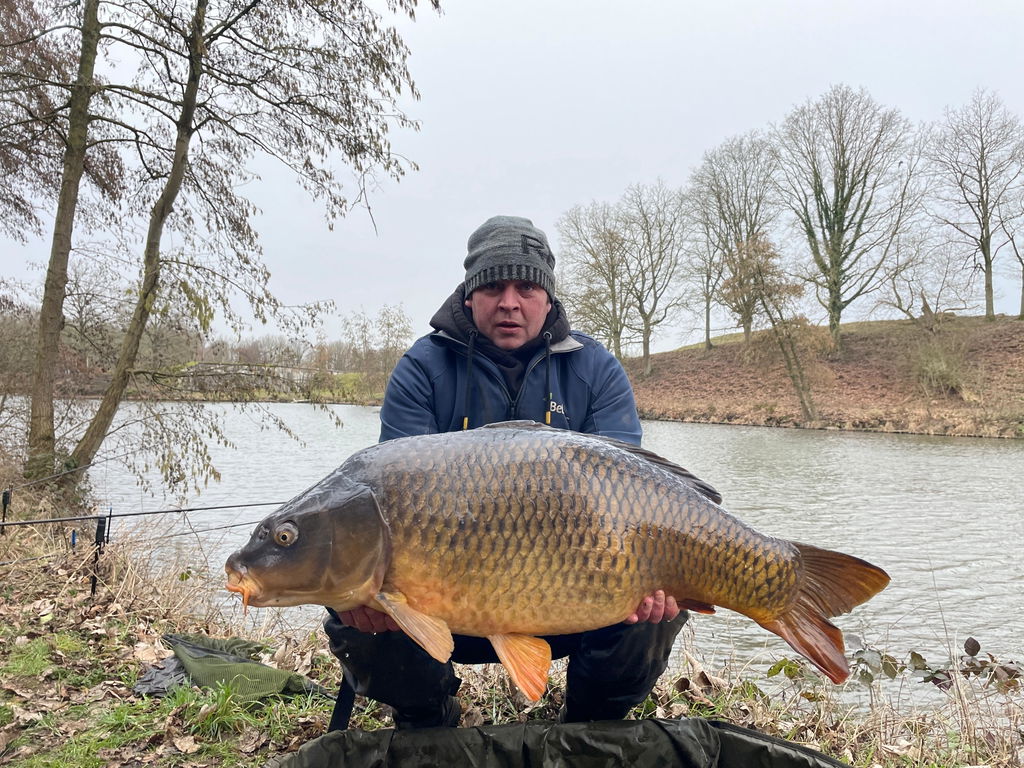
A Wharf carp of 34 lb and 12 oz
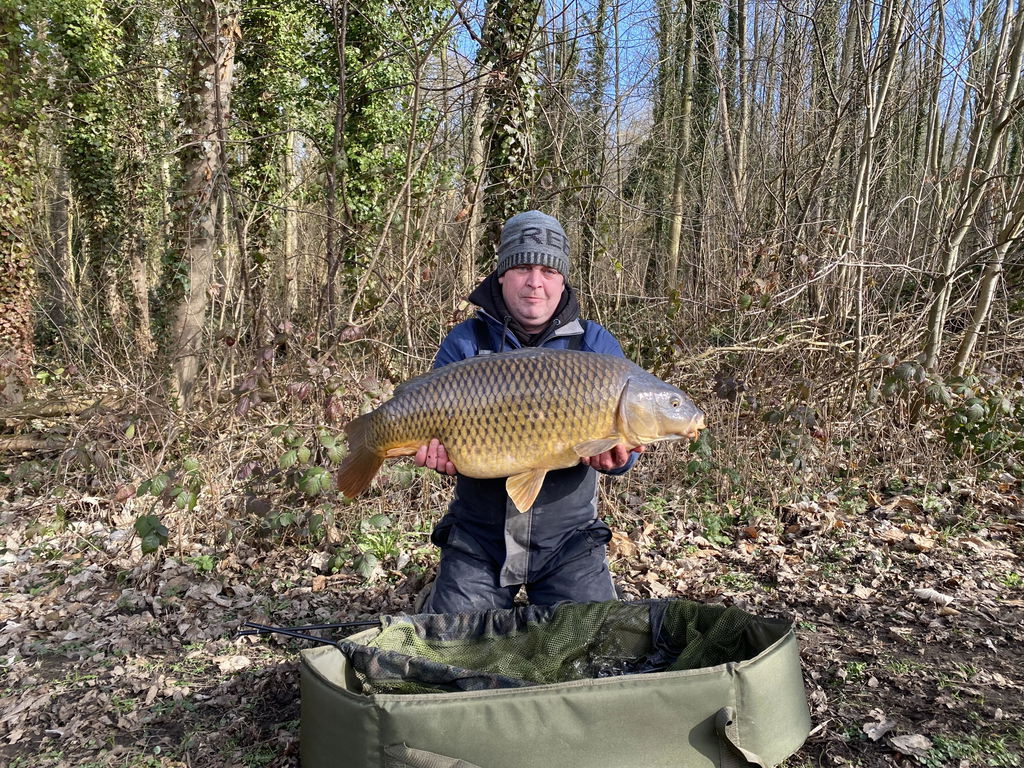
The last big carp weighs 34 lb and 12 oz. It’s again a fish Tom has never caught or consciously seen on photo before.
After a day of walking many kilometers and hardly finding carp for a long time, the catch feels like a great reward.
Tom originally joined The Wharf aiming to catch a Welsh thirty-pounder. During this session, he catches several, including two particularly well-scaled specimens.
The catch shows why persistence and staying mobile are so important. A day can start completely different than the previous one, but one right observation can still change the whole session.
What can you learn from Tom Makers’ urban approach?
The first lesson is that you have to find the carp before choosing a spot. Tom walks a lot, looks under bridges, and uses every clue from the surroundings.
Next, he carefully searches for clean spots on an irregular bottom. There he uses spinner rigs with striking hookbaits and a compact mix of hemp and tiger nuts.
When a presentation clearly works better, he adjusts both rods accordingly. As long as carp are present on the bait, he consistently feeds small amounts.
When the fish disappear, he doesn’t sit still out of convenience. He packs up, moves on, and uses mesh bags to quickly react to new shows.
More than just concrete and city hustle
The Wharf may not look like a classic carp water from the outside. It’s loud, busy, and completely surrounded by urban buildings.
Still, this environment has its own character. Locals talk to the carp anglers, streetlights change the water after sunset, and exceptionally beautiful carp swim under the bridges.
The video shows that a good carp water doesn’t always have to be in a quiet or natural setting. Sometimes special fish swim in places you least expect.
Those who look beyond the concrete discover an active and challenging carp fishery where observing, adapting, and precise work are constantly rewarded.
About the author