

![[ENG] Karpervissen in Zuid-Afrika met Samir en Claire - KarperCentrale](http://www.carpcentral.com/cdn/shop/articles/eng-karpervissen-in-zuid-afrika-met-samir-en-claire-1473158.jpg?v=1786960390&width=10)
Three weeks of carp fishing in wild South Africa
Some carp videos focus on one water, one tactic, or one special catch. This film by Samir and Claire is something completely different. For their first big adventure with Fox International, they travel through South Africa for three weeks, moving from water to water without ever knowing exactly what they will find at the next destination.
Large open reservoirs, flooded forests, extreme distances, hard rocky bottoms, and almost unfished waters alternate. And as if carp fishing wasn’t challenging enough, they share the environment with hippos, crocodiles, snakes, elephants, lions, and other African wildlife.
The result is not a standard session video, but a full carp film where adventure, tactics, friendship, and perseverance are at least as important as the final catches.
Starting with a South African carp schooling
Samir and Claire consciously choose not to fully follow their own plan during the first week. They want to first understand how local carp anglers approach the large South African waters.
That’s a smart choice. Local knowledge is extremely valuable on unfamiliar big water. Where do the carp move? Which depths usually produce fish? Where are stones, trees, and old riverbeds? And perhaps even more important: how do you move safely through an environment that also harbors dangerous animals?
It quickly becomes clear that many local techniques are surprisingly close to the way Samir and Claire fish on large European waters themselves. They therefore decide to use their trusted approach as a starting point and only change when conditions or catches call for it.
Trusting proven rigs
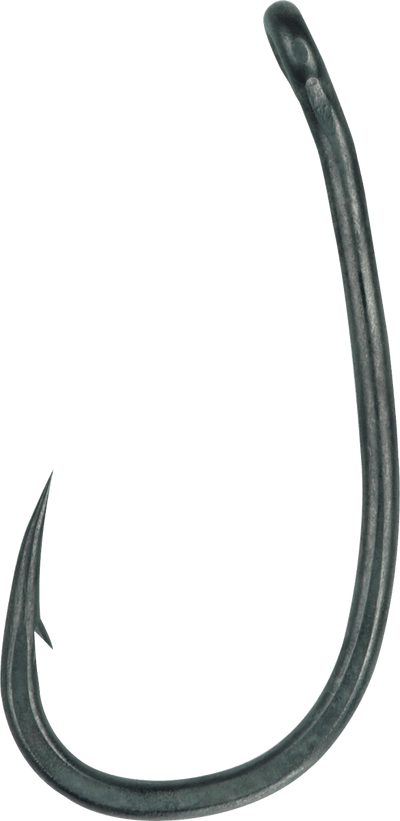
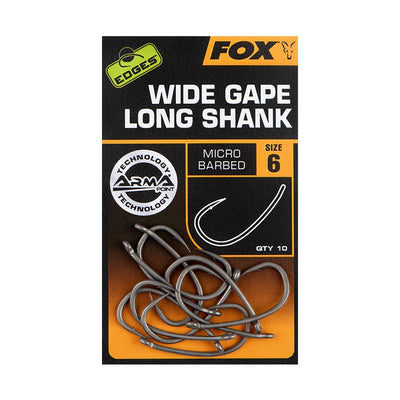
At the first venue, Samir deliberately keeps the rig choice simple. He uses strong leaders combined with sinking braided mainline and opts for Multi Rigs with Wide Gape Long Shank hooks at the business end.
Tiger nuts and corn are used among others as hookbaits. It’s a presentation that inspires confidence and suits the powerful gear necessary on these large waters.
That is an important lesson straight from this film: don’t change everything just because you’re fishing in a different country. A rig that works mechanically well and that you fully trust can still perform excellently thousands of kilometers from home.
A small difference in depth can change everything
The first night remains quiet. Anglers nearby do get bites from slightly deeper water. Instead of stubbornly waiting, a few rods are moved to similar depths.
That change almost immediately triggers action.
Later, the same pattern appears again. When other anglers catch bigger carp at about 6 meters depth, Samir moves his rigs from about 5.5 to 6.2 meters. That difference of less than a meter proves enough to quickly get a bite again.
It shows how precisely carp sometimes follow certain depth contours on big water. A spot may seem perfect in structure, but if the fish swim just a bit deeper, you can spend hours outside the actual route.
Keep responding to what the carp are telling you
The common thread throughout the entire trip is adaptability. Rods that don’t produce aren’t left alone endlessly. Samir and Claire watch others’ catches, observe jumping carp, and use a depth meter to explore new zones.
When a certain depth produces multiple fish, more rods are moved to that depth. When carp show further from the shore, rigs are placed further out. When a spot contains too many obstacles, they look for a similar depth a few meters safer out of trouble.
This is essential, especially on unfamiliar water. Every bite, lost fish, and observation provides new information.
From lots of action to extreme obstacle fishing
After a successful start, a completely different type of water awaits. Beneath the surface lies a huge flooded forest. Trees and stumps are scattered far apart through the water, and some interesting spots lie hundreds of meters from the shore.
For Samir, this type of boat fishing is familiar territory. Claire is seriously introduced to fishing from a boat in very obstacle-rich conditions for the first time here.
The gear is therefore made heavier. Samir switches to a size 4 Wide Gape Long Shank. He continues to use Multi Rigs but also adds his trusted blowback rig.
Over the years, this rig has given him a lot of confidence when targeting larger carp. The hook bait consists, among other things, of a large tiger nut with a small piece of striking bait.
Placing rigs hundreds of meters from the shore
On these large waters, fishing takes place at distances hardly common among Dutch carp anglers. Various rigs lie between approximately 250 and 370 meters from the shore, close to old tree lines and interesting bottom structures.
The depth sounder plays an important role. Samir looks for holes, harder patches, soft zones, and transitions between different bottom types.
A striking spot is a kind of crater among the flooded trees. The rig isn’t just placed in the middle of the obstacles, but positioned where the chance of a bite is combined with a realistic possibility to safely get the carp out of the trees.
Keeping the line clear of obstacles.
After losing a carp, the approach is adjusted again. The line had run through underwater obstacles, which ultimately cost the fish.
Samir then makes an improvised line guide using a long bankstick. This is attached high up in a tree, keeping a large part of the mainline out of the water.
This gives a hooked carp much less chance to take multiple trees or branches with it.
The solution is simple, but exactly the kind of adjustment this fishery demands. You don’t always have to change the rig itself. Sometimes the difference lies in how the line runs through the water between rod and rig.
A large African carp from the flooded forest.
The adjustments pay off. At extreme distance, Samir gets a bite from an opening between the flooded trees.
The fish makes contact with an obstacle again, but by quickly driving the bait boat to the spot and applying pressure on the line, it eventually breaks free.
Then comes the moment they came for: a powerful, large African carp slides into the net.
For Samir, this is the biggest carp of the trip so far. It’s not just the size that makes the catch special. Especially the way the fish is caught—hundreds of meters away, in a fully flooded forest—makes it a true adventure catch.
Wildlife here is no mere backdrop.
Carp fishing in South Africa means being part of a completely different wilderness. Wild animals don’t just make for great footage—they literally determine how safe you can fish.
The team spots hippos, crocodiles, elephants, lions, and various snakes. At one of the camps, a large black mamba is seen nearby. The local anglers take this very seriously and warn Samir and Claire to check sleeping bags, bags, and dark corners every night.
Later it turns out a baboon tarantula spent several days in the bivvy.
The film makes clear that local guidance here goes far beyond just knowing where the carp swim.
Not every fantastic water produces a carp.
One of the most special destinations on the trip lies deep in the African interior. The water is almost untouched, surrounded by stunning scenery, and according to available info holds big mirror carp.
For Samir and Claire, it’s exactly the kind of water they love: no established swims, hardly any people, and lots of unknown factors.
Still, they don’t manage to catch a carp here.
They search with the bait boat and depth sounder, find interesting depth changes, and move to a zone where the wind is more favourable. But with only a few nights of fishing time, the puzzle doesn’t fall into place in time.
Remarkably, they still call it one of their favourite waters of the trip. That says a lot about the film. Success isn’t just measured in kilos of carp.
Showing fish are worth their weight in gold.
At another water, Samir and Claire see several carp jumping. They decide to place rigs at the distance and depth where the fish show themselves.
One of those rods goes off early morning, landing a nice thirty-pounder.
When Claire later loses a fish in an obstacle, they shift the rig a few meters. The depth stays the same, but the presentation is kept clear of the trickiest structure.
Even later in the trip, jumping carp remain the main clue. Rods are moved as soon as fish clearly show up in a different spot, even at distances over 500 meters.
It confirms a simple rule: a visible carp often gives more valuable info than a swim that looks perfect only on paper.
Deeper water keeps producing.
On different waters, deeper spots again form a pattern. A catch from 10 meters deep prompts them to move other inactive rods to a similar depth.
Almost immediately, new takes follow.
That doesn’t mean carp always swim deep. On the contrary: the successful depth changes several times during the trip. The key is that Samir and Claire don’t stick to just one idea.
If multiple catches indicate the same depth, they build on that.
Larger hookbait to target smaller carp selectively
On one of the waters, they get a lot of action, but a large part of the catches consists of smaller carp. Samir then decides to make a noticeably larger presentation.
As a base, he uses a small pop-up, around which multiple tiger nuts are mounted. This creates a cluster of about 30 millimeters on a blowback rig with an extra-long hair.
The idea is to present a much larger food chunk that is less easily taken by small carp.
The tactic doesn’t deliver the hoped-for final result, but that’s exactly why it’s interesting. Selective fishing remains an experiment. A theoretically good adjustment never guarantees the carp will follow the same logic.
The final destination: more than 500 meters from the bank
The last four nights are fished on a large reservoir on the edge of the Kruger area. Here, distance fishing reaches a new level.
Almost all rods are set more than 500 meters from the bank.
With the boat, gravel bars, transitions, and rock structures are sought out. The rigs are placed extremely precisely and fished with small amounts of bait.
After a quiet night, Samir gets a bite. Together with Claire, he heads towards the fish, which eventually lands safely in the net. It’s a heavy African carp that once again shows that all the searching and precise positioning is necessary.
Adjusting until the last night
Even with only one night left, no safe play is made. Non-productive rods are taken out and rigs are adjusted again.
Samir even reverts to a presentation that was successful earlier in the trip: a tiger nut combined with a small boilie on a Ronnie-style rig.
It illustrates how a long trip ultimately becomes one big learning process. Results from the first water can become relevant again three weeks later.
All observations become part of an ever-growing toolbox.
A fully scaled 50-pounder as a bizarre finale
The final morning brings the film an almost unbelievable climax.
A carp has unknowingly picked up a rig, swum around an underwater obstacle, and then pulled through another mainline. At first, the team thinks another rod is getting the bite.
From the boat, it becomes clear how the lines really run. The correct line is eventually followed by hand, and at the end of it, an exceptional fully scaled mirror carp is found.
The fish weighs 22.8 kilos, about 50 lb, and according to the guys is one of the biggest mirror carp caught on that water in a long time.
After three weeks of travelling, blanking, moving spots, snags, lost fish, and endless rig casting, this catch forms a fitting finale.
What can you as a carp angler learn from this film?
Beneath all the wildlife, landscapes, and spectacular moments lies surprisingly much practical carp knowledge.
The first lesson is to keep faith in proven gear. Samir doesn’t change hook patterns or rigs without reason. Only when a specific situation calls for it is the gear adjusted.
The second lesson is that depth can be hugely important. Several times, a shift of less than a meter results in a completely different outcome.
Besides that, it’s important to critically assess inactive rods. A rig that shows no sign of life for two days doesn’t automatically deserve a third day. Use shows, catches, depth sounder images, and experiences from other anglers to make new decisions.
And perhaps most importantly: don’t just place a rig where the most carp seem to be. Also think about what happens after you hook one. On waters full of trees, stones, and other snags, a slightly less spectacular but safer spot is often the better choice.
More than a carp film
What makes this video special is that the carp are ultimately just one part of the story.
Samir and Claire experience game drives, drive for hours through completely different landscapes, sleep among wild animals, and meet South African carp anglers who share their knowledge and experience.
There are moments when everything goes right and days when no bites come. A reel is lost in four meters of water and found again in an almost impossible way. An elephant causes total chaos during a safari, and one of the wildest waters on the trip produces no carp at all.
It’s precisely that mix that makes this Fox video more film than fishing session.
The final message sums up the adventure perfectly. A successful carp trip isn’t just about the weight of the biggest fish. Sometimes the scale of the adventure itself matters far more.
And if there’s one video that makes this clear, it’s this three-week journey of Samir and Claire through South Africa.
About the author