

![[ENG] - Fox Underwater 2026: wat karpers echt doen onder water - KarperCentrale](http://www.carpcentral.com/cdn/shop/articles/eng-fox-underwater-2026-wat-karpers-echt-doen-onder-water-8120968.jpg?v=1779787832&width=10)
Fox dives underwater again at The Sandpit at SNR Fishery. During a spring session, Harry, Scott, and Lewis show how carp react to rigs, pellets, boilies, and different hookbait colours.
Watching carp without guessing
Underwater footage remains one of the most educational ways to understand carp behaviour. At the waterside, we often think we know what’s happening, but only underwater do you see how carp truly respond to bait, rigs, lines, and lead.
In the video Fox Underwater Carp Fishing 2026 - The Sandpit, Harry, Scott, and Lewis return to The Sandpit at SNR Fishery. The goal is clear: to capture with multiple cameras how carp react to different presentations in spring.
The session is extra interesting because The Sandpit isn’t an easy private water where carp experience little pressure. It’s a heavily fished water where the fish regularly encounter rigs, bait, and lines. That’s exactly why the footage is valuable for any carp angler wanting to sharpen their own approach.
Why this spring session is so interesting
The previous underwater session in November was tough. Conditions were harsh, air pressure was extremely high, and the carp barely responded to the bait. Fish did pass over the spot, but real bait activity was limited.
For this new session, spring was deliberately chosen. The water temperature is higher, the carp become more active, and the chance of real bait reactions is greater. Yet it remains challenging. Again, there is high air pressure, and every bite must be earned.
This time the team takes a different approach. Instead of fishing just a few parts of the lake, they spread more rod pressure across the water. This creates a more realistic picture of a typical fishing situation on a busy carp water.
Three anglers, three cameras, and three approaches
Harry, Scott, and Lewis each get their own camera. This allows them to test different spots, rigs, and bait strategies simultaneously. It makes the video much more than just a catch film. You see different choices side by side and can clearly compare what does and doesn’t happen.
Lewis starts at a spot that had been fishing well in the weeks before the session. Scott opts for a shallower sandbank near an island, where a warm wind gently blows. Harry begins on a plateau that looks promising for sunny spring weather.
The presentations used vary clearly. They fish with 360 rigs, combi multi rigs, simple hair rigs, bottom bait presentations, and solid bags. It’s precisely that variety that makes the underwater footage so interesting.
Location proves once again to be more important than anything else
One of the strongest lessons from this video is simple: you have to be on the fish. Harry quickly notices more and more carp appearing on the other side of the lake. Moving underwater cameras is a lot of work, but in a normal fishing situation, he would also relocate.
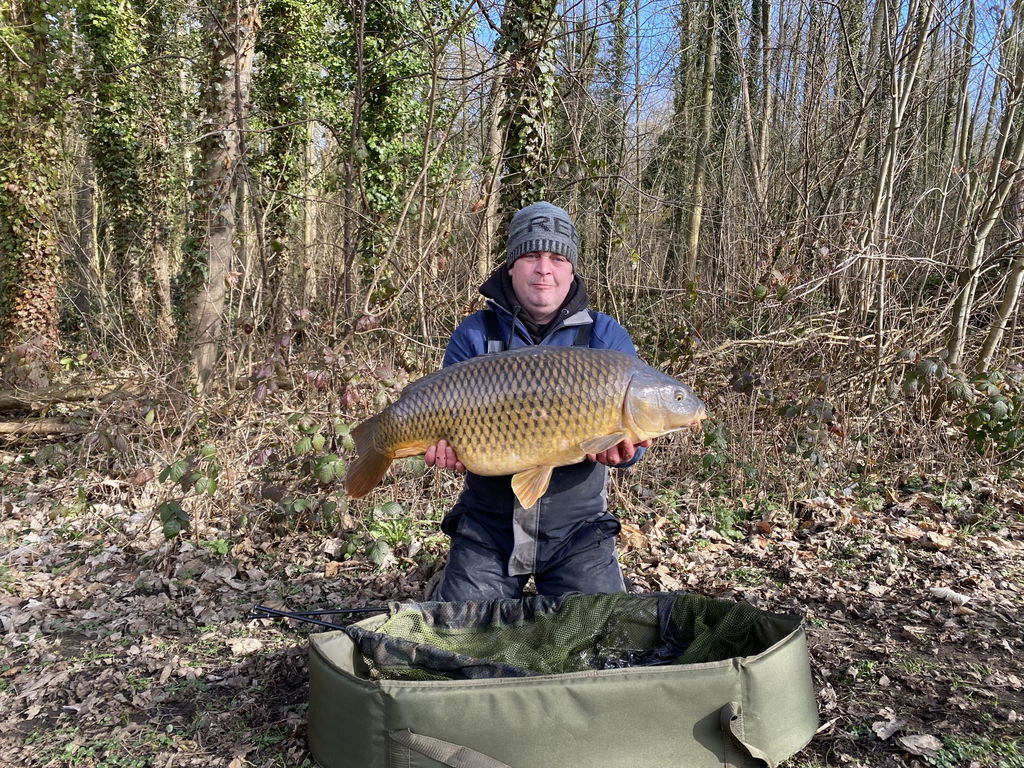
That choice pays off. After moving the camera and rods, more activity comes to the spot. The first real catch of the session eventually comes on a simple hair rig with a red hookbait.
That moment underlines an important truth for carp anglers. The best rig doesn’t help much if you’re not on the fish. A simple rig in the right spot often beats a complicated setup on a dead swim.
Why micro pellets generate so much activity
A recurring theme in the video is the use of micro pellets. Harry deliberately chooses small pellets because carp keep searching longer. They have to work harder to take everything in, which keeps them hanging around the spot longer.
The underwater footage shows this effect can be significant. When more small pellets lie on the bottom, carp return more actively. They root around, turn, stir up silt, and stay longer in the zone.
There’s a tension here. Small particles can make carp feed more confidently, but they can also make hooking more difficult. The fish keep their mouths closer to the bottom and pick up small particles. Still, this gives you more chances, and more chances ultimately increase your catch potential.
The yellow hookbait is ignored
One of the most striking parts of the video is the comparison between bright colors. Yellow looks extremely visible underwater. As a carp angler, you’d expect such a bright hookbait to grab attention quickly.
Still, something else is happening. The carp don’t seem to avoid the yellow hookbait, but they don’t clearly pick it either. They swim past, move around it, and focus more on other bait.
The pink hookbait gets noticeably more attention. Carp clearly line up towards it and pick it up multiple times. That doesn’t mean yellow never works, but these images show that visibility alone isn’t enough. A hookbait can stand out a lot and still not be the bait carp choose at that moment.
Red, pink, and orange stand out best when used correctly
Earlier in the session, Harry lands a carp on a red hookbait. Later, pink clearly gets more bites than yellow. An orange presentation also triggers action. This makes color choice a key theme in this video.
Interestingly, the water has a blue tint. Harry wonders if that tint affects how colours appear underwater. A pink hookbait might look different than in clear, neutral water.
For carp anglers, the lesson is clear: don’t stick blindly to one colour. Look at the water, the bottom, the light, and the carp’s behaviour. Sometimes a colour you’d normally avoid works better than your usual favourite.
Pop-ups aren’t always the best choice on clean bottoms
An important technical insight from the video concerns hookbait presentation. On a clean sand bottom, carp often feed very close to the bottom. They suck low, glide over the spot, and pick up bait directly from the bottom.
Because of that, a pop-up or a wafter floating too high may not match the feeding pattern well. The carp literally swim under the bait or don’t take it the way you expected.
After watching the footage, confidence shifts towards bottom-bait presentations. A hookbait lying close to the bottom fits better with how carp are feeding at that moment. Especially on hard, clean sand bottoms, that can make a big difference.
Simple rigs can still be rock solid
The first fish on camera comes on a strikingly simple hair rig. No complicated setup, no pile of extra components, just a knotless knot, a strong hook, a bit of silicone on the hair, and a coated hooklink.
That’s exactly what makes it educational. In a time when rigs can get more technical, this video shows that simplicity is still powerful. If the rig lies well, the hook is sharp, and the fish takes the bait correctly, it doesn’t have to be complicated.
That doesn’t mean every simple rig is always better. The footage also shows carp can pick up rigs and spit them out without getting hooked. But it does confirm that confidence, sharpness, and correct presentation are often more important than unnecessary complexity.
What lines, tubing, and lead do underwater
A striking observation is how little carp care about material lying flat on the bottom. They swim past tubing, push against it with their fins, and sometimes even feed close by without immediately spooking.
That makes the difference between line running tight through the water and material lying neatly on the bottom. A line higher in the water column can make carp more alert. But tubing, leadcore-like sections, or the last meters of material lying well on the bottom seem much less disturbing in these images.
For carp anglers, this underlines the importance of a neat last meter. Make sure your rig is secure, lies well on the bottom, and complies with the water’s rules. Then the end setup doesn’t necessarily have to be a big worry.
Solid bags: strong, but not flawless
Solid bags are also covered. On screen, such a compact PVA presentation looks extremely attractive: a small bait package with the rig right in the center. Yet this also proves no miracle solution.
A carp takes in the whole presentation but manages to lose the rig. That shows even a perfect-looking solid bag doesn’t automatically mean a hooked fish.
For carp anglers, timing is especially interesting. A solid bag can be strong as a loose drop or when you want to quickly lay down a compact bait presentation. But on a heavily fished spot, the presentation can also be moved or pulled apart by turning and rooting carp.
Why the session ends early
On the third day, everything seems to come loose. The carp feed hard, the water turns murky, and the cameras show plenty of activity. Exactly at that moment, the session seems to enter its most educational phase.
Then it’s seen that some carp start spawning. That abruptly ends the session. The right decision is clear: stop fishing and leave the carp alone.
That’s also an important lesson. No matter how interesting a session is, the carp’s welfare always comes first. Especially around spawning, you as a carp angler must stay alert to behavior and conditions.
What do we learn from Fox Underwater 2026?
This video mainly shows that carp are much less predictable than we often think. A hookbait that stands out isn’t automatically taken. A rig that gave confidence for years can suddenly seem vulnerable underwater. And a simple hair rig can work perfectly when everything is right.
The key lessons are practical. Fish where the carp are. Use enough bait to keep them longer on the spot. Think carefully about how high your hookbait sits above the bottom. Don’t blindly trust one color. And don’t underestimate micro pellets when you want carp to search longer on the bottom.
For carp anglers eager to learn from real underwater behavior, this Fox video is especially valuable. Not because it points out one perfect rig or one perfect color, but because it shows how narrow the margins are. That’s exactly where the strength of good carp fishing lies: keep watching, keep adapting, and keep learning from what the carp itself reveals.