

![[ENG] Echt onderwater karpervissen zonder vooropgezet plan - KarperCentrale](http://www.carpcentral.com/cdn/shop/articles/eng-echt-onderwater-karpervissen-zonder-vooropgezet-plan-3728048.jpg?v=1779787837&width=10)
Alan Blair, Oli Davies, Jacob Worth, and Dan Yeomans fish Bramble Mere exactly as they normally would. No weeks of prep, no perfect swims, and no staged situations—just real underwater footage of carp, rigs, and decisions at the bank.
Underwater carp fishing as it really is.
Underwater footage is hugely educational for carp anglers. You see what normally stays hidden: how carp feed, how they approach a rig, how they react to line, lead, bait, and disturbance. Yet much underwater content is often prepared, directed, or staged around a perfect situation.
In the video Real Carp Fishing Underwater | No Pre-Baiting, No Staging, it’s all about the opposite. No weeks of pre-baiting. No artificially built swims. No perfect spots prepared in advance. The anglers arrive, pick their swim, find a presentable spot for the camera, and fish as they normally would.
That’s what makes this video powerful. You don’t just see the moments when everything goes right, but also the frustration. Cameras that don’t cooperate, rigs just out of frame, carp feeding but ignoring the hookbait, and spots that look better than they actually are.
Fishing with a camera changes everything.
The idea sounds simple: place a rig in front of an underwater camera and wait for a carp to swim by. In practice, it’s much harder. A spot can be perfect for fishing but unsuitable for the camera. Too little visibility, too much weed, too much silt on the bottom, or the wrong angle can ruin the entire shot.
You can already see that with Dan. He spots carp activity and wants to fish where he feels confident. But that spot isn’t clear enough for good underwater footage. In the end, he has to choose another zone where the camera can get a better view.
There’s an important lesson right there. Fishing underwater isn’t the same as normal fishing. You’re trying to catch a fish and learn something at the same time. That requires compromises. Sometimes you don’t fish exactly where you would have chosen without a camera.
Then he looks for a spot with good visibility and confidence.
Dan starts by observing. He sees several carp jumping and then looks for a clean spot where he can present his rig properly. Eventually, he settles on a gravel hump with enough visibility for the camera.
Because of camera work and technical problems, a lot of time is lost, so Dan gets less fishing time than planned. Still, carp activity eventually picks up on the spot. The fish come in, take loose boilies, and slowly grow more confident.
What stands out is how precise everything has to be. From the bank, a cast looks good, but on camera the rig might be just a few centimetres off. The margin is small. A hookbait can be perfectly visible or just outside the real bait trail.
Late in the evening, everything comes together
For Dan, it only happens late in the day. The carp grow more confident, eat more bait away, and eventually there’s almost nothing left but his hookbait. That’s exactly when the chance comes.
The carp picks up the hookbait and gets hooked. After a day of technical issues, little time, and lots of doubt, that’s a fantastic result. Not because it was easy, but precisely because it shows how fine the line is between almost and hooked.
This is familiar to carp anglers. Sometimes nothing happens for hours. Then the light changes, confidence on the spot grows, and suddenly everything falls into place. Especially in clear water, that last hour can be worth its weight in gold.
Oli sticks to his own style
Next up is Oli Davies. He looks at the water differently. While Dan mainly searches for a suitable spot for camera and presentation, Oli prefers to fish closer to the bank. That suits his own style of carp fishing.
He chooses a small, precise zone where the rig has to lie just right. The margin is tight again. A few centimetres too far left or right can determine whether the hookbait is visible and reachable.
Underwater, it becomes clear how carp move through a spot like this. They sometimes feed close to the rig but don’t take it. They’re not always spooked by the rig. Sometimes the rig simply isn’t placed where they prefer to feed.
Not every pickup turns into a take
One of the most valuable insights from this video is that a pickup doesn’t automatically mean a hooked carp. You see carp feeding, approaching the hookbait, sometimes touching or picking it up, yet no real take follows.
That’s exactly why underwater footage can be so revealing. From the bank, you might think nothing’s happening. Underwater, you see carp have definitely been on your spot. They may have fed around your rig, inspected your hookbait, or even picked it up briefly.
For the carp angler, this means trust remains important, but blind trust can be dangerous. A rig can be good, but not optimal in every situation. Bottom type, bait behaviour, carp direction, and lead position all play a role.
Jacob searches open water and hard patches
Jacob Worth fishes Bramble Mere for the first time and starts with an open mind. He sees carp moving in open water and looks for hard patches between weed and softer zones. The camera must give a clear image, but the spot also has to feel logical as a true carp swim.
His approach revolves around a bait spot with boilies, tiger nuts, and a slush-like mix. He wants to keep carp on the spot but at the same time offer a hookbait that fits the bait picture. In clear water, he deliberately chooses a match-the-hatch presentation instead of a bright colour straight away.
It also becomes clear to Jacob that not every well-thought-out plan works immediately. Bait remains untouched, there’s bycatch on the spot, and the real carp activity is slow to show. Yet he keeps searching for the right line, right position, and right angle for the camera.
Spike makes the day
After hours of watching, waiting, and adjusting, the fish they hope for finally arrives. A characterful carp they name Spike on camera returns to the spot. It’s a fish that appeared earlier on screen and clearly shows interest.
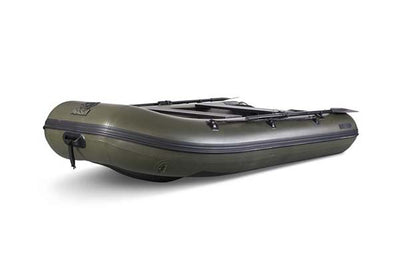
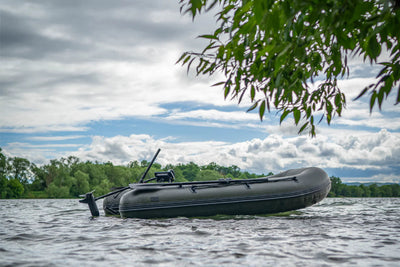
When Spike finally takes the hookbait, he is hooked immediately. The fish gets stuck in the weed and must be carefully landed from the boat. That moment captures the strength of this video well. It’s not a perfect sequence of runs, but a true reward after long watching and keeping faith in the spot.
For Jacob, it's extra special because it's his first carp on the underwater camera. The fish didn't come from an easy baiting scenario, but from a situation where he had to wait for one real chance.
Alan Blair focuses on the details
When it's Alan Blair's turn, the focus shifts even more to the details. He doesn't just want to catch, but above all to learn. How does his line lie? How does his rig fall? How visible is the lead? How does a carp react to a running setup compared to an inline system?
Alan explores several spots, cruises calmly without unnecessary disturbance, and carefully observes weed, gravel, depth, and visibility. He wants to understand where the camera can be placed and where a rig can be logically presented.
His approach is interesting for any carp angler who critically examines their own system. Not just casting blindly, but really thinking about line lay, camouflage, and how a carp takes the hookbait.
Inline or run clip?
One of the most technical parts of the video is the comparison between a fixed inline presentation and a run clip. Alan wants to fish two rigs as fairly as possible side by side. The rig stays mostly the same, but the lead setup changes.
The idea behind the run clip is that the carp can’t use the weight of the lead as directly to throw the hook. Also, a running system can give more indication. In theory, this can be interesting on heavily fished carp that quickly recognise or shake off rigs.
The video doesn’t give a simple conclusion that one system is always better. That’s exactly its strength. You mainly see how many variables play a role. The angle the carp approaches, how hard it feeds, how deep it takes the hookbait, and how the rig lies together determine what happens.
Baiting, precision, and bait behaviour
One theme runs through the entire video: precision. Not just with the rig, but also with baiting. The difference between a baited area just out of sight and one right around the rig is huge.
Carp can be on a spot but mainly feed in a zone just beside your hookbait. It feels like you’re in the right place, while your rig lies just outside the real route. Underwater footage shows this mercilessly.
The bait composition is also crucial. Small particles, crumb, tiger nuts, boilies, and corn all create different feeding behaviours. Carp may search, root around, select, or quickly take loose bites. Your rig needs to match that behaviour.
Why realistic underwater footage is so valuable
This video is powerful because the situation isn’t staged perfectly. The anglers face time pressure, cameras, weed, clouds of silt, wrong angles, bycatch, and changing activity. Just like in real carp fishing.
That makes the lessons useful. You see that a carp sometimes isn’t spooked by the rig. You see that a hookbait sometimes just lies in the wrong spot. You see that a good rig can still be missed. And you see that one small adjustment in position or bait behaviour can make all the difference.
For carp anglers, that might be even more important than a video where everything goes flawlessly. Reality is messy. That’s exactly why you learn more from footage like this about the small details that often remain invisible at the waterside.
What you as a carp angler take from this video
The most important lesson is that there is no perfect rig. A pop-up can work well, but sometimes it becomes too obvious. A bottom bait is taken more often, but can also be blown out more frequently. A simple rig can hook perfectly, but only if it’s well placed and the fish takes it the right way.
Additionally, the video shows that spot choice and presentation must always match. You can find the best spot, but if your rig is just slightly off, you miss chances. You can also fish a perfect rig, but if the carp are feeding just beside the spot, little happens.
Timing also plays a big role. Several key moments happen late in the day. The light changes, the carp become more confident, and the swims come alive. Those who stay sharp then can still make the session.
Real carp fishing, real lessons
Real Carp Fishing Underwater shows carp fishing as it often really is. Not everything is perfect. Not every swim produces. Not every pickup turns into a bite. But precisely because of that, the video feels honest and educational.
Alan Blair, Oli Davies, Jacob Worth, and Dan Yeomans each show their own approach. One relies on feeding, another on precise margin spots, another on match-the-hatch presentations or a technical rig experiment. Together, this provides a complete picture of how carp can behave underwater.
For every carp angler who wants to better understand what happens after the cast, this video is well worth watching. Not because it offers one magical solution, but because it shows how important the details are. The right spot, the right presentation, the right bait behaviour, and the right timing together determine whether that one carp ultimately gets hooked.
About the author