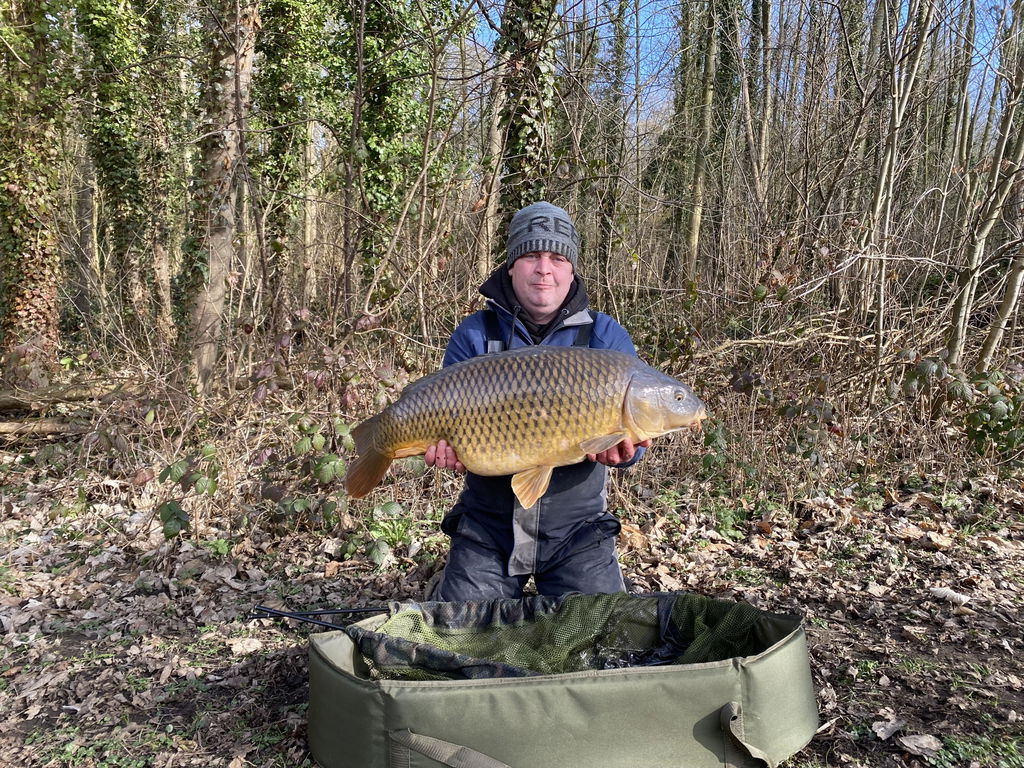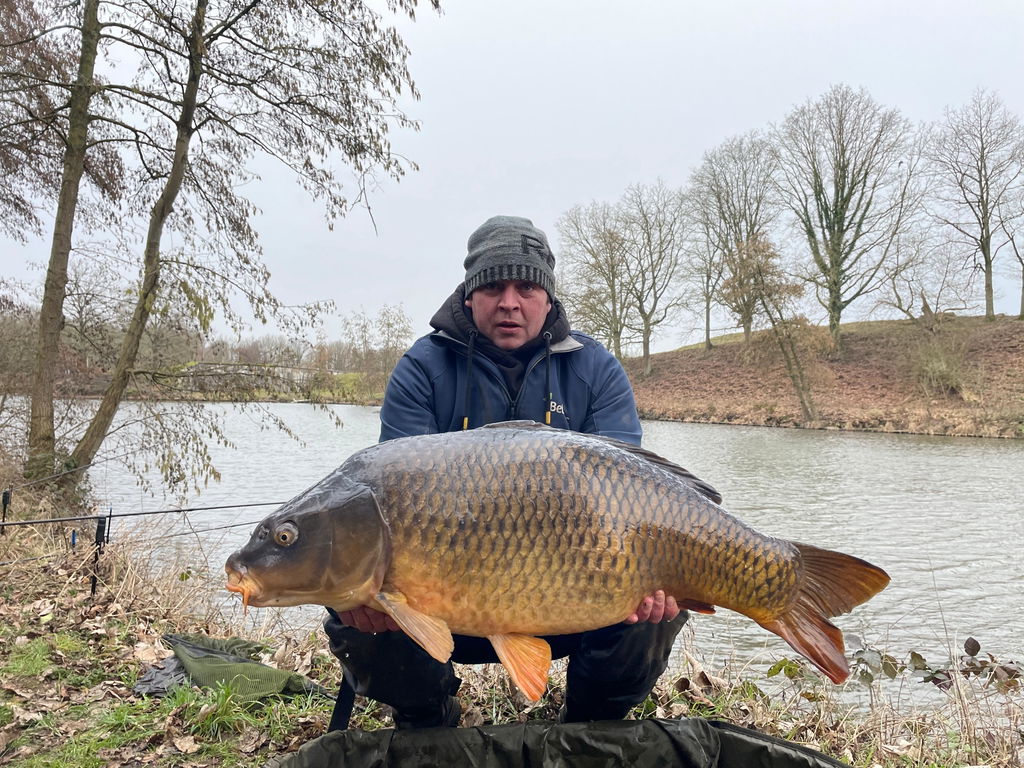

In this Korda Masterclass, Kevin Diederen shows how to successfully fish carp with floating bait. From feeding with dog biscuits to choosing the right float, hook, line, and hookbait presentation.
Why surface fishing is so exciting
Surface fishing for carp is perhaps the most visual way to carp fish. You see the fish swimming, you see them feeding, and sometimes you literally see a carp take your hookbait. This makes the fishery incredibly exciting but also frustrating when the fish look but don’t take.
In the video Masterclass - Surface Fishing - Catching Big Carp with Floating Bait, Kevin Diederen demonstrates how he applies this approach on a clear gravel pit. The water is straightforward but certainly not easy. There’s a limited carp population, and the fish really have to be found and tempted to feed.
That’s an important lesson right away. Surface fishing isn’t just about tossing out a crumb. You have to read the wind, find the carp, build trust with bait, and present your hookbait at exactly the right moment.
Surface fishing can be done on more waters than you think
Many carp anglers associate surface fishing with small ditches or shallow urban waters. Yet Kevin shows that this technique can also work on larger and deeper waters. Think of gravel pits, clear lakes, and even waters where the carp already experience heavy fishing pressure.
The condition is simple: the carp must be active near the top. If the fish are swimming high in the water, taking floating bait, or hanging just below the surface, opportunities arise.
On larger waters, you often have to fish differently than at close range. Sometimes the carp are 30, 50, or even 80 meters from the bank. Then you need a float, floating line, and a rod with enough backbone to fish accurately.
Start by watching and searching
The first step in surface fishing is always locating the carp. Kevin starts by scanning, feeding, and observing. Sometimes you can see the fish right under the surface. Other days, you have to cover ground and try multiple spots.
A polarizing pair of sunglasses is almost indispensable for this. They allow you to see much better through the glare on the water and spot shadows, swirling fish, or carp just below the surface more quickly.
In the video, the fish aren’t exactly where Kevin expects them. He first feeds a corner where fish were before, but the carp seem to have moved. By staying mobile and searching further, he eventually finds a group of fish showing interest in the chunks.
Use the wind to your advantage
Wind plays a big role in surface fishing. Floating bait doesn’t stay in one spot but is carried by wind and current. That can be tricky, but you can also use it to your advantage.
Kevin deliberately feeds upwind, so the chunks drift calmly into the zone where he expects carp. This way the fish come into contact with the bait naturally without you having to feed right on top of them.
Ideally, the wind is head-on or at your back. That way you can keep better contact with your line and your presentation stays easier to control. If the wind is crosswise, you’ll get more bends in the line and your float or hook bait can move unnaturally.
Don’t cast in too quickly
One of the key tips from the video is to be patient. When carp start feeding cautiously, it’s tempting to throw your hook bait in right away. But often that’s too early.
Kevin first builds trust. He feeds small amounts, watches how the fish react, and waits until they start feeding more clearly. On many waters, you’ll see one or a few fish test cautiously first. If you spook those fish with a bad cast, the whole group can disappear.
The goal is to build up feeding competition. Once several carp grab chunks at the same time and become less cautious, the chance of a mistake increases. That’s the moment to cast precisely.
Which biscuits do you use for surface fishing?
Dog biscuits remain one of the most popular baits for surface fishing. The video mentions Bonzo Menu biscuits as a well-known choice. They float for a long time, are easy to get, and some larger ribbed biscuits work well with a bait band.
Still, Kevin doesn’t fish only with big chunks. He also mixes smaller floating pellets or small bits through the bait. That variety creates a more natural bait presentation and can keep the carp up top longer.
Small particles have a big advantage. The fish tend to keep their heads at the surface searching more often, instead of grabbing one big chunk and then swimming off. This makes them more visible, predictable, and easier to cast to.
Why oil can be handy
Kevin sometimes oils part of his floating bait. He doesn’t do this necessarily because it improves the bait itself, but mainly because oil helps calm the water surface.
With light chop, it can be hard to see your particles clearly. A bit of oil can locally smooth the surface, helping you see where your bait lies and if fish are cruising underneath.
Use this sparingly. Don’t grease your entire stock of particles at once. Rather put a small amount of particles in a separate bucket and add oil only when you need it.
The right rod and reel
For short range, you can fish light and subtle. But once you’re working with floating bait at longer distances, you need gear that can cast further and offers enough control during the fight.
Kevin uses a 12 ft surface rod with a 2.75 lb test curve. That sounds heavy for surface fishing, but it makes sense when fishing with heavier floats at distance. You need to place the float far out and make quick contact on a bite.
A 5500-size reel fits well with this approach. Such a reel has enough line capacity, a good retrieve speed, and enough power to fish at distance with control.
Floating line makes a difference
A floating nylon line is important for surface fishing. When your line sinks, a bend forms more easily between rod tip and hook bait or float. This slows your contact and can displace your presentation undesirably.
With floating line, control is better. You see what’s happening more clearly, can react faster, and pull your hook bait less unnaturally towards you.
Kevin uses a 10 lb floating mainline as an all-round choice. It offers a good balance between casting, control, and reliability during the fight.
Fishing with floats at distance
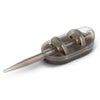
When carp are feeding on loose particles beyond casting range, surface floats come into play. Kevin uses Interceptor Floats in various weights, such as 15, 30, and 50 grams.
You choose the weight based on the distance you need to reach. The goal is often not to cast exactly on the fish, but to cast beyond them and calmly pull your hook bait back towards the cruising carp.
At distance, the float is also your main bite indicator. You often can’t see your hook bait clearly enough. That’s why you watch the float. If it suddenly moves, slides away, or you see a carp taking a pop-up nearby, it’s time to strike.
Long leader below the float
In clear waters, carp can spook at a float that’s too close to the hook bait. That’s why Kevin uses a longer leader of about 1.50 to 1.70 meters below the float.
That distance ensures the hook bait lies more naturally among the loose boilies. The float stays further from the fish, while you still have enough casting weight and control.
For the leader, Kevin uses thin, strong nylon line. His principle is simple: as thin as possible, as strong as necessary. For wary fish, he chooses more subtlety; for weed or tougher conditions, he opts for more security.
The right hook for floating bait
A good surface hook must be small, strong, and reliable. The video mentions the Mixa hook as a favorite. This hook has a short shank, wide bend, and claw-shaped point.
That shape provides a lot of grip during the fight. That’s important because surface fishing often means using small hooks and sometimes fishing in conditions where you need to apply solid pressure.
Kevin prefers size 10. It’s subtle enough for floating bait but still offers enough security once a carp is hooked.
Hook bait: real boilie, imitation, or pop-up
For short range, a real dog biscuit with a bait band often works excellently. Especially ribbed boilies hold well in the elastic. When freelining or fishing with a short float, this is a simple and natural presentation.
At longer distances, a real boilie becomes trickier. Casting, reeling in, and repositioning can soften the boilie or cause it to slip out of the elastic. Then imitation boilies or modified pop-ups are a good alternative.
Kevin shows how he trims a pop-up into a small floating pellet. He creates a flat side, cuts a notch, and glues the hook shank into the bait with superglue. This results in a sturdy hook bait that casts far and stays buoyant for a long time.
Check the buoyancy of your hook bait
A key detail is the buoyancy. Your hook bait shouldn’t float like a cork high on the surface. Real boilies often hang just in the surface film, especially when they absorb some water.
That’s why Kevin checks his hook bait in the water. By trimming or peeling small pieces off the pop-up, you can adjust its buoyancy. This way, the hook bait sits more naturally among the loose boilies.
This is a small detail, but with shy carp it can make a big difference. A hookbait that floats too high or too conspicuously can be ignored.
Surface fishing is all about switching
The video clearly shows that surface fishing doesn’t always come easy. Some days Kevin has to search long, move spots, and feed again. Other days the carp take pellets within minutes and action comes quickly.
That’s what makes this fishery so addictive. You get immediate feedback from the carp. If you see they ignore your hookbait, you can try something else right away. A different color, a real pellet, an imitation pellet, or a trimmed pop-up can suddenly make the difference.
So don’t stick too long to one presentation when you see the fish feeding but leaving your hookbait alone. Especially with surface fishing, you can switch quickly.
Handling carp safely in warm weather
Surface fishing often takes place on warm days. Fish safety is extra important then. Make sure your unhooking mat, net, and water are ready before you start fishing. Keep the fish on the bank as briefly as possible and let it recover calmly before releasing it.
Kevin demonstrates that the caught fish are handled quickly and carefully. Especially in high temperatures, you want to keep the fight swift but controlled and then let the fish recover well in the water.
Preparation is important for yourself as well. Sunscreen, plenty of drinks, and shade are not a luxury when you’re active by the water in the middle of the day.
What you can take away from this Masterclass
This Masterclass shows that surface fishing is more than just a pellet on a hook. Success starts with searching, watching, and understanding where the carp are holding. Then it’s about smart feeding, having patience, and only intervening when the fish show confidence.
The key lessons are clear. Use the wind to your advantage. Build confidence with small amounts of floating bait. Vary the pellet sizes. Choose a float that suits the distance. Use a long hooklink in clear water. And always check that your hookbait floats naturally.
For carp anglers who want to fish actively and visually during summer, surface fishing is a fantastic technique. It requires patience and sharpness, but the reward is huge. Seeing a carp rise to your hookbait and then getting hooked remains one of the most beautiful moments in carp fishing.