


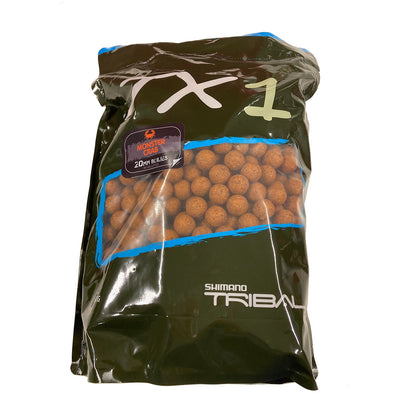
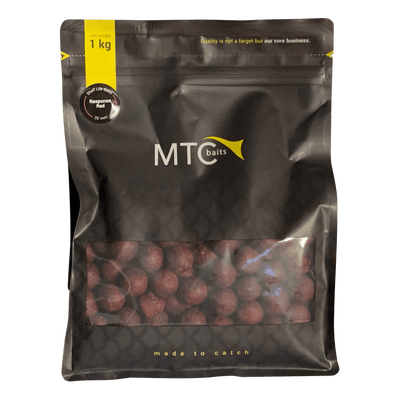
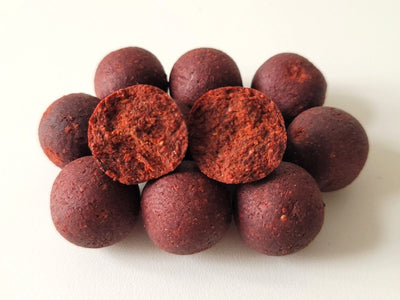
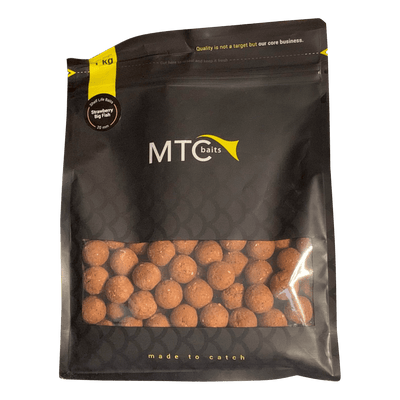

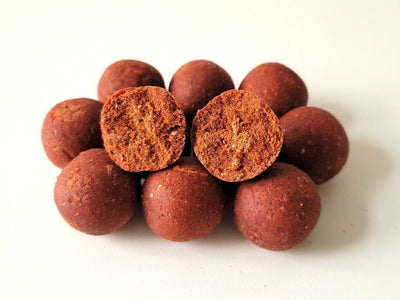
Boilies for carp fishing: choose the bait that suits your fishing style
Boilies have been among the most used carp baits for years, and for good reason. They are easy to feed, relatively selective for carp, and available in various compositions, flavor profiles, and sizes. However, there is a big difference between just grabbing a bag of boilies and consciously choosing a boilie that matches the water, the season, and your fishing method.
At CarpCentral, you’ll find boilies for a wide range of carp fishing styles. From attractive boilies for short instant sessions to nutritious variants that allow you to build a feeding spot over a longer period. When buying boilies, it’s wise to look beyond just scent or flavor. Digestibility, nutritional value, texture, diameter, and the amount of attraction released by the bait are just as important.
What are boilies?
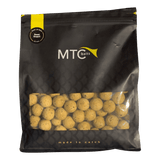
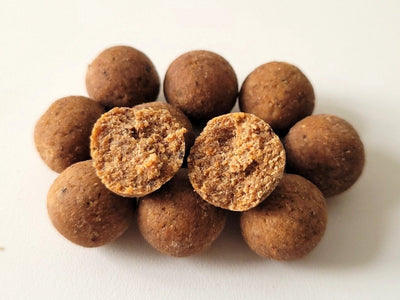
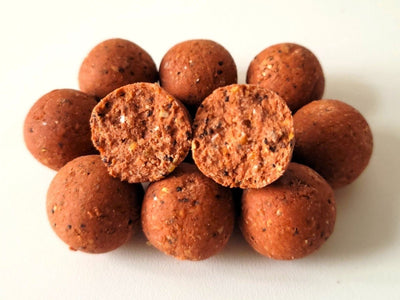
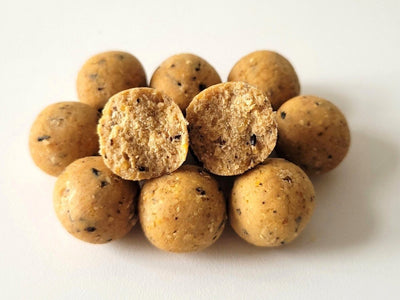
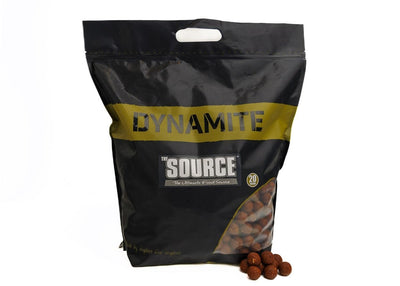
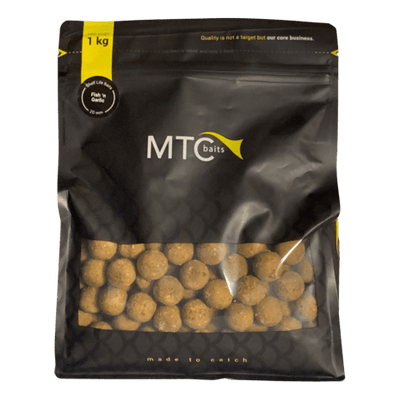
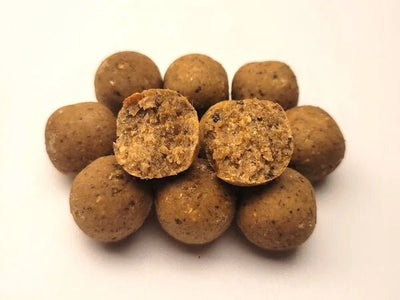
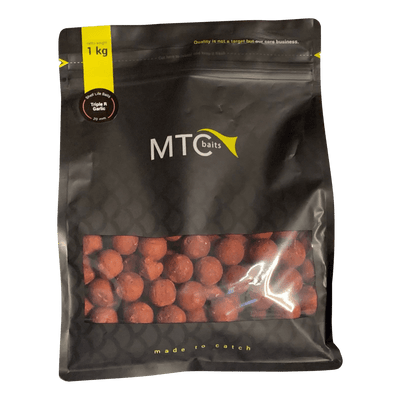
Boilies are compact bait balls mainly used for carp fishing. A boilie consists of a mix of dry and liquid ingredients that are cooked or steamed after processing. This creates a firm piece of bait that holds well on the hair and can remain intact underwater for a long time.
The exact composition varies greatly per boilie. Think of fishmeal, milk proteins, grains, seeds, herbs, sweeteners, soluble attractors, and various liquid ingredients. This composition largely determines how nutritious, digestible, and attractive a boilie is.
A good carp boilie doesn’t simply have to have the strongest scent. Especially when feeding regularly, it’s important that carp can easily digest the bait and want to eat it again.
What are the best boilies for carp?
There is no boilie that automatically is the best choice on every water and under all conditions. The best boilies for carp are those that fit your situation. Fishing for a few hours on a heavily fished water demands different bait than fishing for several days or maintaining a feeding spot for weeks.
For a short instant session, a boilie with relatively high immediate attraction can be interesting. The bait must quickly give off signals that trigger passing carp to investigate and feed. For a longer feeding campaign, nutritional value becomes more important. You want the fish not only to find the boilies but also to regard them as a reliable food source.
When choosing boilies, consider:
- water temperature and season;
- the amount of rod pressure on the water;
- a short instant session or longer feeding campaign;
- the diameter of the boilie;
- the digestibility of the bait;
- nutritional value and ingredients used;
- a sweet, spicy, fruity, fishmeal, or krill profile;
- the presence of whitefish and other unwanted species;
- the amount you want to feed.
What size boilies should you choose?
The diameter of a boilie affects both presentation and your feeding strategy. Smaller boilies provide more loose bait particles per kilogram and can keep carp searching for food longer. They are interesting when you want to create an active feeding area or fish subtly.
Larger boilies can be handy when you want to feed more selectively or have a lot of smaller fish. Also, when casting with a baiting tube, sizes around the usual medium and larger diameters are popular.
It’s not necessary to always use one size. Feeding different diameters together can create a less predictable bait picture. On heavily fished waters, this can be interesting because carp don’t encounter exactly the same size bait every time.
Sweet boilies, fishmeal or krill boilies?
Another common choice is between sweet boilies and heartier variants based on fishmeal or krill. Both can catch carp all year round. The idea that one flavor profile only works in a certain season is too simplistic.
Sweet boilies often contain fruity, creamy, or other sweet flavor and scent profiles. They are widely used for instant fishing and combine well with eye-catching hookbaits. Fishmeal boilies are usually built around fishmeal and additional animal or plant ingredients. They can be especially suitable for anglers who want to use a boilie as a long-term food source.
Krill boilies are also popular in modern carp fishing. Krill can be part of both the nutritional value and the attractive profile of bait. However, always look at the complete composition when choosing, not just the name on the packaging.
Which boilies to use in spring?
In early spring, the water is often still cold and carp’s food intake is generally lower than in warmer months. Large amounts of heavy bait are not always necessary then. A well-digestible boilie that releases attractors relatively easily can be interesting during this period.
Feeding smaller amounts also gives you more control. Start, for example, with a few boilies around your rig and only build up when you notice the fish actively feeding. Crushed boilies can also be useful because they release a lot of scent and flavor without offering a large amount of food immediately.
Boilies in summer and during feeding campaigns
At higher water temperatures, carp are generally more active and more bait can be fed on many waters. This makes summer suitable for anglers who want to build a spot over several days or even longer.
A quality feed boilie with good nutritional value really comes into its own here. The goal of a feeding campaign is not only that fish take the bait once but that they return regularly. Always build up the feed amount based on fish stock, water type, and observed activity. Feeding more is only useful if it is actually eaten.
Using boilies for instant carp fishing
Instant fishing requires a different approach. During a short session, you don’t have days to build trust. Often, a compact feeding spot is more effective than spreading large amounts of boilies without reason.
A few whole and broken boilies around your hookbait can be enough. Crushing boilies creates more surface area, allowing soluble components to release faster. You can also combine the bait with pellets or particles if you want to create more varied food particles on the spot.
Combining boilies with pop-ups, wafters, and liquids
The boilie you feed doesn’t have to be exactly the same as the bait on your hair. By subtly changing the hookbait, you can make the presentation stand out more or adapt it to the bottom.
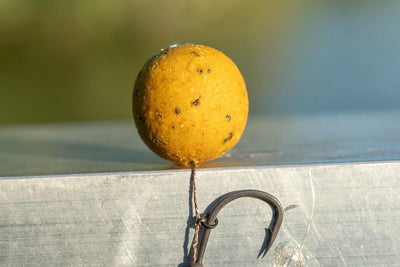
A pop-up offers a fully floating presentation and can be interesting over silt, weed, or soft bottom material. Wafters are lighter balanced and can make the hookbait easier to pick up while keeping the appearance close to the feed.
Glugs and dips can also be used to strengthen the attractive signal around the bait. Don’t overdo this automatically: extra scent doesn’t always mean more bites under all conditions. A subtle presentation can be especially effective on heavily fished waters.
Feeding with whole or crushed boilies
Whole boilies are ideal when you want to spread bait over a larger area or fish more selectively for carp. Crushed and halved boilies create smaller food particles and release attractors faster.
Combining both creates a feeding spot where carp can’t easily grab a whole boilie and swim off. The fish has to search for different food particles and can stay longer on the spot. This can be especially interesting when fishing multiple rods around the same feeding zone.
Making your own boilies
Carp anglers who want full control over ingredients, hardness, and attraction can also make their own boilies. For this, a base mix is combined with liquid ingredients until a dough forms. This is rolled out into bait and then cooked or steamed.
Making your own allows you to tailor a recipe very specifically to your fishing. Think of a more soluble mix for cold water or a nutritious composition for a long feeding campaign. Within our range for making your own bait, you’ll find products to experiment with different compositions and attractors yourself.
How many boilies should you feed?
The right amount depends on the water and the fish present. On a small water with few carp, a handful of bait may be enough, while on a large water with a high stock, significantly more feed can be eaten.
Therefore, look more at the conditions than at a fixed amount in grams or kilos. Activity of whitefish, water temperature, carp stock, session duration, and previous catches all provide information. When in doubt, controlled build-up is often smarter than feeding a lot immediately. You can always add extra bait; once fed, boilies can’t be removed from the water.
Buying boilies at CarpCentral
If you want to buy boilies, first determine what you want to achieve with the bait. Are you looking for maximum instant attraction for a short session, a reliable boilie for regular feeding, or an economical amount for a longer campaign? From that choice, you can further select based on composition, flavor profile, diameter, and price.
At CarpCentral, you’ll find carp boilies for various conditions and fishing styles. This way, you can choose specifically between different flavor directions, sizes, and bait types instead of relying solely on packaging or scent. Combine a suitable boilie with a good presentation and a well-thought-out feeding strategy, and you lay a strong foundation for every carp session.