
Introduction
The common carp (Cyprinus carpio) is an omnivorous fish with unique adaptations in its feeding behavior. Anglers take advantage of this by developing special bait — such as boilies — that appeal to the senses and preferences of carp. In this reference document, we first examine the biological mechanisms and sensory stimuli that determine carp feeding behavior. We highlight relevant scientific findings, from classic studies (like Howard Loeb's "Reactions of Aquarium Carp to Food and Flavors" from 1960) to more recent insights, including Japanese research on carp nutrition. We also briefly compare the feeding and bait behavior of wild carp with that of koi carp (domesticated carp). The second part contains an extensive list of known boilie ingredients. For each ingredient, we indicate if and how it is mentioned or studied in scientific literature, and why it is biologically or chemically attractive to carp.
Biological basis of carp feeding behavior
Physical characteristics and bait intake
The carp has a mouth that can telescope out to suck food from the bottom. Around the mouth are two pairs of sensory organs (barbels) that serve as touch and taste organs when searching for food. Carp do not have "normal" teeth in their jaws, but they do have pharyngeal teeth deep in the throat. These are molar-like tooth plates (5 on each side) on the gill arch that crush hard food — think shells and seeds. Carp chew with their throat: while food is sucked in, it is ground between these throat teeth. Anything too hard or large to crush is spat out again. This explains why carp do not eat food they cannot crush; their bait intake is physically limited by the strength and shape of their pharyngeal teeth.
Digestive system
Notably, carp have no stomach; the food mass passes directly from the throat to the intestine. Because of this, a carp cannot store "large amounts at once" or pre-digest food for long — instead, it prefers to eat small portions regularly. The absence of a stomach also means carp do not experience the same feeling of fullness as many other animals. They often keep searching for food, especially when the water is warm enough for active digestion.
Carp are cold-blooded and their metabolism depends on the water temperature: above about 18 °C carp actively search for food, but below about 8 °C feeding almost completely stops and the fish enters winter dormancy. This is crucial for anglers — in warmer months carp feed greedily, while in cold water bait is barely taken.
Natural food sources
As true omnivores, carp eat a wide range of natural food sources. Their diet includes bottom-dwelling creatures (worms, insect larvae such as mosquito larvae), small crustaceans, mollusks (snails, mussels), but also plant material (weed, soft parts and seeds of aquatic plants) and organic detritus. This broad diet explains why carp can accept very different types of bait.
A classic observation is that carp are "omnivores" that will try almost any type of bait, as long as it fits in their mouth and can be crushed. They are not picky about color or shape — for example, a carp makes little distinction between differently colored boilies as long as the smell and taste are right. This means the chemical signals (smell and taste) of bait are more important than visual cues like color. Indeed, carp show little specific preference or aversion to certain colors or light intensities, while certain tastes and smells can trigger very strong reactions. This largely explains the success of modern carp bait: exploiting the carp’s sensitivity to chemical stimuli.
Sensory perception during feeding
Carp use a combination of senses to locate and assess food. Feeding behavior results from an interplay of smell, taste, sight, and mechanical stimuli, with chemical senses usually dominant.
Smell (olfaction)
Carp can smell dissolved substances in the water with their olfactory epithelium in the nostrils. Chemical substances must be dissolved in water to be detected by the olfactory nerves. The carp’s nose is sensitive to traces of scents; for example, amino acids released from natural prey can be "smelled" from some distance. Smell mainly plays a role in locating food from afar: water currents carry soluble attractors that the carp detects with its nose, guiding it towards the bait.
Taste (gustation)
As soon as the carp gets close to food, taste takes over. Taste receptors are not only in the mouth itself but also on the lips, barbels, and even spread over parts of the carp’s body surface. This means a carp "tastes" substances as soon as it physically comes into contact with them — for example, when it roots through the bottom with its snout or sucks in bait.
The taste sense of carp is very well developed: large nerve centers (vagal and facial lobes) in the brain are dedicated to processing taste stimuli from the mouth/throat and lips/barbels. This enables carp to distinguish a wide range of substances, and their taste sense is extremely sensitive. It has been scientifically proven that amino acids—the building blocks of proteins—are among the most effective taste stimuli for carp: for example, L-proline can be detected at concentrations around 10⁻⁸ M, an extremely low amount.
In experiments with the carp’s taste organ, nerves responded most strongly to neutral L-amino acids (such as alanine, glycine, proline) with a small unbranched side chain. These are exactly the amino acids commonly found in natural food sources (for example, in the sap of worms or mollusks). D-amino acids (the mirror form) and basic amino acids like lysine hardly evoke a taste response in carp—the carp has evolved to primarily recognize the naturally occurring L-form. The high taste sensitivity means a carp will often first taste something and possibly spit it out if it doesn’t like it before deciding to swallow. Taste is the decisive test for a carp to determine if something is edible.
Hearing and lateral line (mechanosensation)
Besides smell and taste, mechanical perception also plays a role in food searching. Carp have a lateral line organ and internal ear bones (Weberian apparatus) that detect vibrations and pressure waves in the water. This allows a carp to sense the movement of prey animals in the water or in the substrate.
For example, Loeb's research showed that blind carp could still catch live, moving prey. They owe this to their lateral line: a small shrimp darting away causes vibrations that the carp can detect flawlessly. For the angler, this means a carp can also respond to vibrations (such as landing bait or nearby sounds), although carp are generally less sensitive to sound than predatory fish. However, restless movements can warn carp of danger—hence anglers often move gently to minimize vibrations through the water’s edge.
Vision
Although carp have eyes and can see colors, their underwater vision is generally of secondary importance when foraging. In murky or dark water (where carp often live), visibility extends only a few decimeters. Carp therefore primarily rely on smell and taste. Experience has shown that carp are indifferent to visual differences in bait—even variations in light intensity or color do not lead to clear reactions.
That does not mean that visibility in clear water cannot help: a carp that sees a brightly colored boilie just a few centimeters away may notice it faster. But ultimately, the carp will only open its mouth if the taste and smell stimuli are attractive. In experiments, carp responded much faster and stronger to attractive tastes and smells than to light stimuli. In short, the emission of attractants is more important than a bright-colored bait — something experienced anglers confirm.
Feeding preferences and responses to nutrients
Stereotypical bait behavior
Carp exhibit stereotypical bait behavior that is "triggered" in phases by various stimuli. Hungry carp often swim slowly around ("searching"); once they encounter a stimulus — whether smell, taste, movement, or sight of something edible — they switch to more focused searching activity. They may start digging, sucking, and tasting. Scientists describe this as appetitive behavior that transitions into actual feeding behavior.
During this process, the carp determines by tasting whether it will actually eat the item. Often a carp will take a new or hard bait into its mouth several times and spit it out before deciding to swallow it. Only if it tastes good and the texture is manageable will it swallow and continue eating until satiated. Individual carp can show differences (some are more cautious, others greedier), but the general pattern is the same.
Which substances attract carp?
Extensive bait research shows that few substances truly repel carp, but some substances actually have extra attraction. Loeb tested more than 100 different flavorings and extracts on carp in his classic study. He observed that none of the tested flavors caused strong aversion — even very bitter or strange tastes at most made carp not immediately re-take the spit-out bait.
Pure salt solution or alcohol were strangely barely noticed by the carp, probably because these substances only stimulate at high concentrations. Most flavors were neutral to the fish: the carp tasted it but did not react particularly after that initial inspection.
However, a number of substances triggered a very clear positive response: carp became more actively searching and eagerly took the bait. Among the most powerful attractants in Loeb's experiment were surprisingly a few everyday sweets and aromas, including brown sugar, white sugar, molasses (concentrated sugar syrup), saccharin (artificial sweetener), imitation maple syrup, instant coffee, and even tobacco and saliva. Bait impregnated with such substances was often eaten immediately or sought after vigorously.
This underlines that carp can be a kind of "sweet tooth" — carbohydrate sources that leak sugars, like maize, do well as bait, just like boilies with sweet additives. It’s no coincidence that maize kernels, tiger nuts, and other sweet nuts are legendary carp baits; their taste is clearly perceived as tasty by carp.
Amino acids and soluble proteins
Besides sugars, amino acids and peptides (small protein fragments) are potent triggers. Scientists discovered that almost all fish species strongly respond to free amino acids in the water. In carp, this is very pronounced: certain amino acids released from, for example, worms or fishmeal act as a natural attractant. Carp have both smell and taste receptors for this.
Japanese researchers (Marui et al.) demonstrated that carp taste receptors are most sensitive to neutral L-amino acids (such as alanine, glycine, serine, proline) and barely respond to D-amino acids or basic amino acids. They also found that combinations of amino acids sometimes have a synergistic effect — together they stimulate the fish more strongly than individually. This means bait that releases a mixture of amino acids (such as a hydrolysate or yeast extract) can be extra attractive.
Incidentally, the carp’s taste sense is more specifically tuned to amino acids than its sense of smell: the taste buds respond to a narrower spectrum but with higher sensitivity, while the nose can detect more types of molecules (for example certain nucleotides), albeit with slightly less sharpness. In short, carp taste amino acid-leaking baits at close range and are stimulated to feed — a phenomenon exploited in bait production by adding fishmeal, hydrolyzed proteins, or extracts.
Proteins versus carbohydrates
In the history of carp bait, there have been two schools of thought: one argued that high-quality protein in bait is essential (Fred Wilton’s HNV theory), while the other pointed to the direct attraction of carbohydrate and sugar sources. Both contain a kernel of truth.
Practical experience has shown that carp can be caught well on relatively "simple" carbohydrate-rich baits — think dough, potato, or maize — despite their low nutritional value. Anglers later understood that it is the leaching of sugars and starches that makes this bait so attractive. Cooked potato or maize releases glucose and other soluble substances that carp can taste well underwater.
In contrast, the first generations of "super boilies" full of casein and other milk proteins often proved less immediately attractive, because pure proteins like casein hardly release flavors or soluble stimuli. Only when proteins are partially pre-digested (for example as amino acids or peptides) do they become truly attractive.
Carp do benefit from protein-rich food in the long term — they can learn to repeatedly feed on nutritious bait — but the instant bite reaction is more determined by what the bait releases into the water (attractants) than by nutritional value alone. Modern boilies therefore try to combine both: sufficient nutritional value and enough soluble triggering substances.
Summary: what attracts carp?
Carp instinctively respond to a range of natural stimuli: sweetness, amino acids, fish or shellfish extracts, and so on. These stimuli work best when water-soluble, creating a scent and taste trail. Bait without any scent or taste leakage (for example very hard boilies without soluble ingredients) can be overlooked by carp.
By adding attractors to bait that resemble what carp naturally prefer, catch rates can be greatly increased. Scientific research confirms that carp have innate preferences for certain chemical stimuli — these taste preferences are genetically fixed and change little regardless of diet. A carp can hardly resist bait that sends the right signals, no matter how "new" it is in its environment.
Even a completely unfamiliar scent like maple syrup was eagerly approached by carp in tests. The carp must respond to such stimuli, even if it has never encountered them evolutionarily before. This explains why exotic flavors or synthetic flavours (from pineapple to scopex) can be successful in carp bait — they activate universal taste pathways in carp, such as the "sweet channel" or "amino acid channel."
Comparison: wild carp vs. koi carp
Koi carp are essentially domesticated varieties of common carp, bred for color and kept in ponds. Although genetically the same species, behavioral differences can arise due to domestication and environment. Scientific research has quite surprisingly shown that these differences are mainly quantitative, not qualitative.
A study in Japan compared a wild carp population (from Lake Biwa) with two bred strains (a commercial farmed carp and an ornamental koi). All fish were raised under the same conditions to test innate differences. It showed that the wild carp had a slimmer, more streamlined body and displayed behavior that made them more successful in natural food searches: they ate more free-swimming prey, focused more on bottom food, and could detect prey faster than the two domesticated groups. Moreover, the wild carp were more cautious (alarm behavior when threatened by predators) compared to koi, which were less shy.
The koi carp in the experiment had a higher, thicker body and proved less efficient at catching live prey — they lacked some of the hunting skills and grazing drive of their wild counterparts. This difference is explained as an effect of domestication: koi and other pond carp usually get easily available feed (pellets on the water surface) and don’t need to actively hunt or root around. As a result, traits like quick reaction to moving bait or intensive bottom rooting are less selected for in koi.
It is important to note that these differences are not absolute. Genetically, koi are very close to wild carp, and researchers observed that even a population originally descended from koi regained more "wild" traits after a few generations in the wild. In practical situations, koi in a pond still show typical carp behavior: they root through gravel searching for food remnants, and their taste receptors and sense of smell are as good as those of wild carp.
A koi carp will basically find the same bait triggers attractive. The difference is more that koi are used to artificial feed and sometimes take less selective bites at the surface, whereas a wild carp is more cautious. Koi can learn to feed from the hand (by associating humans with food), while wild carp associate the human silhouette with danger.
For bait behavior, this means that findings from scientific tests with koi carp (such as sensitivity to amino acids or grain preferences) are largely applicable to wild carp. In conclusion: koi and wild carp have the same senses and food preferences, but the intensity with which they forage and their caution can differ due to their environment and history.

Boilie ingredients and their attraction
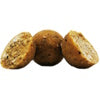
Boilies (cooked dough balls) are the most popular carp bait in modern fishing. Their composition can vary greatly, but they typically contain a mix of base ingredients (for bulk and nutritional value) and additives (for extra attraction and binding). Below is a comprehensive list of known boilie ingredients. For each ingredient, we discuss whether it appears in scientific research or is supported, and what the biological or chemical attraction is for carp.
Animal ingredients
Fishmeal
Ground fish (meat) is a main component of many high-quality boilies. Fishmeal has been extensively studied in aquaculture as feed; it is known for its excellent amino acid profile, digestibility, and palatability for fish. High-quality fishmeal (for example, herring meal or anchovy meal) contains about 65–75% protein plus fish oil and minerals.
Fishmeal is attractive to carp because it naturally occurs in their diet (carp also eat small fish and crustaceans) and because it contains many water-soluble stimulants. It releases amino acids, small peptides, and nucleotides as soon as it is in water. Biologically, carp recognize the scent of nutrient-rich animal material in fishmeal. The amino acids in fishmeal (such as alanine, glycine, taurine) stimulate their taste receptors, and the fish oil present provides a strong scent trail.
Research shows that adding fishmeal to fish feed improves feed intake and growth due to increased palatability. In fact, fishmeal is considered the "gold standard" in feed attraction: it enhances both nutritional value and immediate appeal. Literature notes that exclusive fishmeal bait contains little carbohydrate and may be less digestible in cold water, but in terms of bait response, fishmeal is almost always positive.
Krill and shrimp meal
These are meals made from ground shellfish (Antarctic Krill, shrimp, gammarus, etc.). In scientific literature, they are used as supplements in aquafeed due to their attractivity, although specific research on carp is scarce. It is known that krill and shrimp naturally contain high levels of betaine and free amino acids. Betaine (trimethylglycine) is a very strong feeding stimulant for many fish (including carp) and is found in high concentrations in shellfish. These meals also have a strong smell and taste — an umami-like fish/sea aroma.
Carp anglers notice that adding krill meal or shrimp meal to boilies can increase the "instant response" — carp take the bait faster. Practical sources mention that shrimp meal often has better instant attraction than pure fishmeal. Biologically, this makes sense: carp in the wild readily eat water fleas, shrimp, and bait shrimp; the taste of shrimp meal will therefore be familiar and appealing. In scientific literature on feeding stimulants, betaine from krill is often cited as a natural attractant for carp-like fish.
Bloodmeal
Dried and ground blood (often bovine blood) is a protein-rich ingredient (around 80% protein) sometimes used in boilies. Bloodmeal appears in livestock and aquafeed studies as an alternative protein, but it has limited attractivity on its own. It does contain specific amino acids (high in lysine and leucine) that are nutritionally valuable, but has little water-soluble fraction — it doesn’t leach many flavor compounds.
Raw bloodmeal has an iron-like meaty taste that carp don’t necessarily love, and too high a content can make boilies bitter or unappealing. In small doses, bloodmeal can serve as a binder and protein source without deterrence. Carp also eat bloodworms (midge larvae) in the wild, and the aroma of bloodmeal somewhat resembles the muddy, iron-rich taste of bloodworms. There is little direct science proving bloodmeal is "tasty" for carp; it’s more a practical protein source that contributes to the overall amino acid profile of the bait.
Liver powder / liver extract
This is an ingredient made from dried liver (from beef, chicken, or fish), often enzymatically hydrolyzed so it contains soluble amino acids and vitamins. Liver extracts are known as attractants in predator fish bait and sometimes carp bait; they contain natural free amino acids, nucleotides (such as adenosine monophosphate), and vitamins that can stimulate bait uptake.
Liver powder is known among anglers as an "instant trigger" — carp respond strongly to its umami flavor. Biologically, liver is highly nutritious (vitamin B12, amino acids) and carp seem to have an instinctive preference for animal organs and flavors. A liver extract partially dissolves in water and releases a meaty scent with an amino acid peak, which carp can quickly detect. Liver powder falls under the category of "animal hydrolysates" that act as attractants due to amino acid signals and is likely one of the most attractive animal powders for carp bait.
Egg products (egg powder, egg albumin)
Many boilies are bound with eggs; in dried form, ingredients like whole egg powder or egg albumin (protein powder) are used. In carp feed studies, egg powder is not used as an attractant but as a high-quality protein source or binder. It has a very high protein value (albumin about 80% protein) and good binding properties, but no known chemo-attractive effect.
Egg on its own is neutral in taste and leaches little—egg albumin coagulates when cooked into a rubbery matrix. Carp have no specific preference for egg flavor; a boilie with lots of egg but no other flavors is often perceived as "bland." Still, egg is indispensable for forming a hard boilie; without egg (coagulation), the bait falls apart. Biologically, egg adds essential amino acids, but what makes it directly attractive is mainly what you mix with the egg. Egg powder is therefore not intended as an attractant but as a binder and protein source.
Plant-based ingredients
Soybean meal / soy protein isolate
Soy is a widely used plant protein ingredient, often replacing more expensive fishmeal. It has been extensively studied as a fishmeal substitute in fish diets. Nutritionally, soy has a high protein content (around 40–50% in full-fat soybean meal, about 90% in isolate) but is limited in methionine. Palatability for carp is somewhat lower than fishmeal—carp will eat soy-rich diets but less eagerly unless flavorings are added. Raw soybeans contain anti-nutritional substances and flavors that can even repel carp. Cooking or roasting improves flavor by reducing tannins and releasing sugars.
Frankly, soybean meal is not very attractive on its own; it is quite bland. Carp in trials prefer other particles over unflavored soy. Soybean meal in boilies is often used for texture and protein balance, and because it is cheap. Carp have no natural urge to seek out soy flavor. In practice, soy-based "birdfood" boilies only perform well when heavily flavored. Soybean meal is a fine feed ingredient but has no proven attractant effect unless processed and combined with appealing ingredients.
Cornmeal / corn kernels
Corn is probably the most famous carp bait (think canned corn as instant bait). In boilies, cornmeal, corn grits, or polenta are used as carbohydrate sources and binders. Corn is rich in starch and contains some natural sugars. Carp can digest starch, albeit moderately without pre-processing. Cooked corn releases glucose and maltose into the water.
Sweet maize aroma and taste strongly attract carp. Loeb’s finding that regular sugar and molasses are top attractors directly explains maize’s success: during cooking, maize produces sugar syrup. Maize also contains amino acids like glutamic acid that provide umami, and some oil in the germ with a specific aroma. Sweet maize kernels are like candy to carp — numerous field observations and competitions confirm this. In boilies, maize meal provides a mild sweet taste and good texture. Although maize is not very high in protein, it forms a cheap bulk bait that carp readily eat. Maize (meal) is biologically attractive due to the released sugars and is often used in science as a control bait precisely because carp accept it so well.
Wheat (semolina) / bread flour
Wheat products like wheat flour, semolina, or breadcrumbs are used in almost every boilie as a binder and carbohydrate source. Wheat starch is well digestible for carp at high water temperatures and wheat also contains some protein (gluten, about 12%). It is less studied as an attractor but is known as an energy supplier.
Wheat on its own has a grainy, neutral taste that carp are not crazy about. Still, wild carp eat a lot of wheat grains when offered, probably because fermentation of soaked wheat produces some sweetness and alcohol. Fresh wheat is less attractive than maize or hemp. In boilies, wheat semolina provides structure and hardness. It doesn’t leach much except possibly starch. Therefore, wheat mainly acts as a carrier and less as an attractor. An advantage is that wheat is relatively well digested and contains no antinutrients. Wheat (semolina) is neutral — no strong attractor, no repellent — and is used to bind other attractive substances into a nice ball.
Hemp seed
Hemp (Cannabis sativa seed) is a famous particle bait and additive in boilies. Often roasted or crushed hemp seed is mixed into the dough. There is little formal research on hemp as fish bait, but experience shows carp love it. Hemp contains about 30% oil, rich in omega-3, and a distinctive nutty aroma. It also has protein (about 20%) and a crunchy structure.
Hemp is known as "addictive" carp bait — once they start, carp often keep feeding. This is partly due to the crunchy texture: when carp eat hemp, the seeds crack between their pharyngeal teeth. Chemically, hemp releases aromas of roasted nuts and oils that carp find attractive. Many anglers notice that even small amounts of hemp in the feeding spot keep carp occupied for a long time. This can be explained by hemp oil containing fat-soluble attractants (terpenes) and the protein fraction that dissolves to release amino acids. Hemp seed in boilies gives a flavor and aroma boost (roasted note) and a texture element; it has proven very effective in practice.
Tiger nuts
Tiger nut (chufa) is actually a tuber but treated as a nut particle. They are rich in sugar and fat. In boilie form, tiger nut meal or extract is sometimes added. Although not specifically studied, it is known that tiger nuts contain a lot of sugar (glucose, sucrose) after preparation and have an almond-like flavor.
Tiger nuts are extremely popular with carp — so much so that warnings exist that carp can overeat on them. They taste sweet and nutty and remain crunchy. For carp, this combines the best of both worlds: sugars that act as attractors and crunch for mouthfeel. Additionally, tiger nuts contain oil (with vitamins) that spreads scent. In the angling community, it’s established that tiger nuts are among the most beloved natural baits. Important: unprepared (hard) tiger nuts are not eaten — they cannot be ground, consistent with Loeb’s observation about too hard food items being avoided. Tiger nut (products) provide sweetness and aroma and are biologically attractive because carp instinctively appreciate the combination of sugar and fat.
Peanut meal
Ground peanuts (earth nuts) are also used in boilies as a fat-rich binder. Raw peanuts contain anti-enzyme factors that are harmful, but roasted peanut meal is a good protein/fat source. However, too much peanut can lead to deficiencies (imbalanced amino acids) and possible health damage from toxins (aflatoxin if poorly stored).
Peanuts are notorious and famous. On one hand, peanuts are known as highly attractive bait — carp can literally become "addicted" and ignore other bait. The flavor of peanut is rich, oily, and somewhat sweet. On the other hand, peanuts must be handled carefully: improperly prepared peanuts can make carp sick or even kill them (raw peanuts contain enzyme inhibitors that block the fish’s digestion). For this reason, peanut meal in moderate amounts (and roasted) is safest in boilies.
Roasted peanut meal gives a strong nutty aroma that partially washes out in water. Many carp mixes use peanut meal to add a sweet nutty flavor and because it provides cheap bulk volume. There is no scientific study specifically explaining why carp love peanuts, but empirically it’s clear that peanut bait catches very well. Biologically, the combination of fat (energy) and protein in peanuts may have a rewarding effect, encouraging carp to keep feeding. Along with tiger nuts and hemp, peanuts fall into the "nuts" category that carp find tasty. When used correctly, peanut meal is a flavorful addition to boilies.
Additives and attractants
Betaine
Betaine (trimethylglycine) is a natural substance (derived from glycine) found in crustaceans, beet, fish, etc. It is perhaps the best-known food stimulant in the angling world. Betaine has been extensively researched as a feed attractant. It was first identified around the 1970s as a powerful stimulant for fish feeding behavior. Results with carp species are mixed, but generally, betaine at low concentrations can stimulate feed intake.
Betaine tastes slightly sweet/salty and is very water-soluble, causing it to quickly leach from a boilie and form a chemical trail. Carp may recognize betaine as a signal substance associated with the presence of food organisms (such as mollusks). Many scientists have reported that betaine influences fish behavior in bio-assays, although with carp it was sometimes less dramatic than with predators. Nevertheless, betaine is popular among carp anglers because it often seems to help in difficult conditions.
Biochemically, betaine may work through taste receptors for amino-like substances. It is odorless to humans, but fish detect it sharply. In boilies, a few grams of betaine per kilo can be enough to have a measurable effect — at least, that is the belief supported by several studies and practical experience. Betaine has scientific backing as a feed attractant and is biologically attractive to carp because it provides a strong, recognizable chemical stimulus.
Free amino acids (amino additives)
Some high-quality bait products contain pure amino acids or combinations (for example L-lysine HCl, L-glutamine, amino-acid blends). As discussed earlier, free amino acids are very effective in triggering taste responses in carp. Experiments have shown that adding certain amino acids can make bait more attractive — for example, a mix of alanine, arginine, and glycine can make carp bite faster in bait tests.
Each amino acid has a slightly different taste (sweet, umami, bitter, or sour). Neutral amino acids like alanine and glycine taste sweet and are highly attractive to carp. Sour amino acids (such as glutamic acid) are less effective in taste for carp but can work through scent (think of an MSG-like trigger). Basic amino acids (such as lysine) vary — carp don’t clearly taste them, but they can contribute somewhat through scent.
By using a cocktail of amino acids in a soak or liquid, multiple receptors are targeted simultaneously. In fact, this mimics the signal of a natural food source (which always leaks multiple amino acids at once). Biologically, this makes perfect sense: carp smell and taste "here is something edible, various nutrients are coming out." That is why products like Corn Steep Liquor (CSL), rich in free amino acids through fermentation, work so well. Free amino acids as additives are scientifically proven carp attractors and increase the biological appeal of bait by directly delivering the stimuli carp are evolutionarily tuned to respond to.
Sugars and sweeteners
Carp have, as seen, a remarkable sensitivity to sweet tastes. Ingredients like molasses (sugarcane syrup), brown sugar, honey, corn syrup, or artificial sweeteners (such as saccharine, NHDC, thaumatine) are often added to bait.
Loeb's research clearly showed that sugars (glucose, sucrose) and even the intense sweetener saccharine triggered strong feeding responses. This indicates that carp have an innate preference for sweet, as suggested elsewhere (other fish like barbel and tench also show this). One study noted that adding sugar to otherwise unattractive seeds (soybeans, peas) greatly improved bait uptake.
Sugar in bait provides an immediate taste reward. Carp have taste receptors for "sweet" that work similarly to mammals. Moreover, sugar provides quick energy, which is also an evolutionary advantage to like. Many ready-made carp flavours contain intense sweeteners to make the bait more attractive. Saccharine, for example, has been used in boilies since the 1980s to mask a bitter flavour and still give carp a sweet signal. Thaumatine (Talin) is a protein sweetener also popular for this purpose.
Biologically, sweeteners contribute little nutrition, but purely for attraction, they are useful. Sugars and sweeteners have proven very effective and partly explain the success of many baits — think of scopex, tutti-frutti, and pineapple, all very sweet flavors. Excess must be avoided: too much soluble sugar can weaken the dough, and in cold water, high sugar concentration is less soluble. But low concentrations (a hint of sweetness) are enough to make bait attractive.
Salt (NaCl)
Table salt is sometimes mentioned in recipes, both as a preservative and a flavor enhancer. Unlike sweetness, salt is not a strong trigger for carp. Loeb found that carp barely detected or ignored pure salt solutions. Carp often live in freshwater with very low salt content; they therefore lack the evolutionary drive to find extra salt appealing.
A little salt in bait can improve electrolyte balance or accentuate other flavours, but carp are not thought to be specifically attracted to it. Biologically, the effect of salt in bait is probably minimal: carp only taste it at higher concentrations and even then it is more of an aversive stimulus. In terms of boilie ingredients, salt is not a proven attractor for carp, rather a flavour enhancer for the mix. Moderately (for example less than 1%) it does no harm and can improve fermentation of particles.
Herbs and spices
Many attractive boilies contain natural herb extracts or spices. Classic is Robin Red, a secret herb mix (with paprika, chili, etc.), or additions like garlic powder, chili powder, cinnamon, anise, caraway, and essential oils (black pepper oil, clove oil, etc.). There is little hard data for carp on this, although it is known that some fish species (e.g., trout) feed better with herb additions.
Garlic contains the sulfurous allicin which has a strong smell — fish can probably detect this. Chili contains capsaicin, to which fish are insensitive (capsaicin stimulates mammal receptors that fish lack), but chili also contains aromas (paprika-like) and red pigments.
Carp seem to appreciate spicy, aromatic baits, as shown by the success of boilies with, for example, Robin Red. It may be that the essential oils in herbs act as oil-based attractors — Loeb demonstrated that carp can even smell oily substances. Anise oil or black pepper oil disperse slowly in water but are extremely potent; a few drops suffice. Such scents are unusual (not directly from their diet), but carp often respond with curiosity or positively.
Some spices also have antimicrobial properties, which help boilies stay fresh longer — a practical advantage. Biologically, herbs fall under "new but promising": they contain numerous organic compounds (terpenes, alkaloids) that might fit carp receptors. There is anecdotal evidence that garlic boilies work well in muddy water, possibly because the pungent smell can still be detected through the mud. Herbs and spices are proven by experience, although the exact mechanism is unclear.
Organic acids (e.g., citric acid, butyric acid)
These are acidic substances that sometimes appear deliberately (butyric acid in pineapple flavour) or unintentionally (lactic acid through fermentation) in bait. There is interesting evidence that certain organic acids stimulate feed intake. Kasumyan & Døving (2003) noted that citric acid and alpha-ketoglutarate in tests can promote feeding behaviour in carp and other coarse fish. Butyric acid (n-butyric acid) is known in angling as an attractor, but scientific documentation specifically for carp is limited.
Many successful flavours (like scopex, buttercream, fruit flavours) contain a hint of butyric acid — it smells like rotten butter/pineapple and seems to trigger carp. Carp may associate this scent with fermenting food (e.g., rotting plant parts with insects inside) and therefore investigate it. Citric and malic acids can be released during particle fermentation.
Fermented bait (with a sauerkraut-like smell) is often very well taken by carp — think fermented corn or boilies left to “rot” for a few days. The acids lower pH locally, which carp can detect: one study found carp’s taste response to amino acids is pH-dependent. Biologically, it’s plausible carp recognize acidic byproducts of bacterial breakdown as a sign of digested, easily absorbable food (carp have no stomach — external pre-digestion suits them well). Organic acids are less studied but promising attractors. Butyric acid is a popular secret weapon in some bait recipes.
Fermentation products (e.g., Corn Steep Liquor, yeast extract)
CSL is a liquid byproduct of corn starch production (fermented corn steep water), and yeast extracts come from brewing or baker’s yeast. These products are rich in free amino acids, peptides, nucleotides, and B vitamins, and have often shown positive effects on feed intake and growth in bait studies. One study showed carp are taste-sensitive to nucleotides (like inosine monophosphate) found in yeast extract.
Fermentation products combine many attractive factors: they are water-soluble (leach well), contain amino acids (stimulate taste), and often have an umami-like savory flavor and aroma from yeast/autolysis. Corn Steep Liquor is famous for its sweet yeast smell that carp are drawn to, especially when used in spod mixes. Yeast extract (like Marmite-style paste or powder) provides a salty-savory taste from glutamates and ribonucleotides — similar to what carp taste when feeding on swarms of water fleas or other plankton.
Biologically, carp likely recognize fermentation products as a concentrated food signal. CSL, for example, is a proven liquid that often delivers immediate results; carp quickly locate the spot thanks to the cloud of amino acids and vitamins in the water. Scientists in the Czech Republic and Japan have tested fermentation extracts to attract carp and found strong positive effects. In boilies, these liquids add extra attraction without altering the dry mix. Fermentation products have scientific backing as carp attractors and significantly boost biological appeal.
Synthetic flavours (aromas)
Last but not least: the many artificial aromas added to boilies — from fruity (strawberry, banana, pineapple) to fish/crab or cream/toffee scents. Despite their widespread use, there is little direct research on specific aromas in relation to carp. However, Loeb’s work already gave a lead: an artificial maple flavour proved very effective on carp, and he suggested that unusual aromas can "force" the fish to respond purely through their chemical potency.
Flavours consist of mixtures of esters, alcohols, ketones, etc., which are volatile and can be smelled or tasted by the carp. A pineapple flavour, for example, can contain butyric ester (smell of pineapple/butyric acid) plus isoamyl acetate (banana-like smell). A good flavour can make bait distinctive and give a strong scent trail. Carp can detect such molecules; whether they recognise it as "tasty" has proven to be trial and error.
Many successful aromas mimic natural attractors: crab bait flavour, for example, contains bromophenols also found in real crab; fruit flavours contain esters present in fermenting fruit (carp eat fallen fruit in some waters). Furthermore, there is the principle of conditioning: if a certain flavour is often associated with food for a carp, it can start to associate that smell with feeding (classical conditioning).
Yet anglers claim that some aromas always catch well, even on waters where the carp have never smelled them before — implying that the chemicals themselves are attractive. For example, scopex (a vanillin-butyric acid aroma) is a classic that works worldwide, probably because the combination of sweet and sour in that aroma stimulates multiple senses. Biologically, aromas may be the least natural ingredient, but they are an important tool in bait development. They provide a scent signature of your boilie in the water that can trigger curiosity and ultimately bait-taking behaviour in carp.

Conclusion
The art of carp bait lies in combining ingredients in such a way that both the sensory stimuli (taste, smell, texture) and the nutritional needs of the fish are met. Scientific research supports the focus on chemosignals: carp are highly sensitive to soluble stimuli such as amino acids, sugars, betaine, and nucleotides, and less so to visual or shape signals.
An effective boilie will therefore always contain something that leaches out and "alerts the carp to a treat." At the same time, carp learn to appreciate bait that feeds them — so ingredients like fishmeal and soy contribute to bait acceptance in the long term through nutritional value.
The list above shows that almost every boilie ingredient plays a role, whether as an attractor, binder, bulk, or nutritional component. A successful mix is balanced: for example, 30–40% fishmeal (attractive and nutritious) mixed with 20–30% grains (energy and binding), supplemented with 10–20% milk/protein (harder and nutritional), plus 5–10% extra attractors (such as krill, betaine, spices, sweetener). Of course, there are countless variations, but the common thread is clear: understanding carp bait and feeding behavior greatly helps in creating effective bait.
Thanks to scientific insights — from Loeb’s pioneering work to modern koi nutrition studies — we know why carp go for certain boilies and ignore others. With that knowledge, anglers can gain an advantage and practice ethical carp fishing by using bait that not only attracts but also nourishes the fish.
Science in the service of your catch
What you’ve read above is just the tip of the iceberg. At Solution Boilies, we combine in-depth biological research with years of experience at the water’s edge. Every boilie we develop is the result of careful choices based on sensory responses, nutritional needs, and proven triggers in carp.
Why spend years experimenting, weighing ingredients, and testing boilies yourself — when you can rely on ready-made recipes that have already convinced countless carp?
Our ready-made boilies are developed with the same science as in this article.
Available from 34.95 per 5KG, ready to use immediately.
References
Several sources that contributed to this article. Without them, this would not have been possible.
- Carp senses and taste: Loeb (1960) – NY Fish & Game Journal
- Marui et al. (1983) – J. Comp. Physiol.
- Koi vs wild carp behavior: Matsuzaki et al. (2009) – J. Fish Biol.
- Fish feeding preferences: Kasumyan & Døving (2003) – review in Fish and Fisheries
- Aquaculture nutrients: FAO carp profile (fao.org), IFAS Extension on Fishmeal
This information has been gathered and compiled in this article by Carp Catching Solution Boilies.